
Construction TODAY
EDGE keeping the

Serving the commercial concrete construction industry with superior service and quality for over 60 years.
keeping people working...Safely
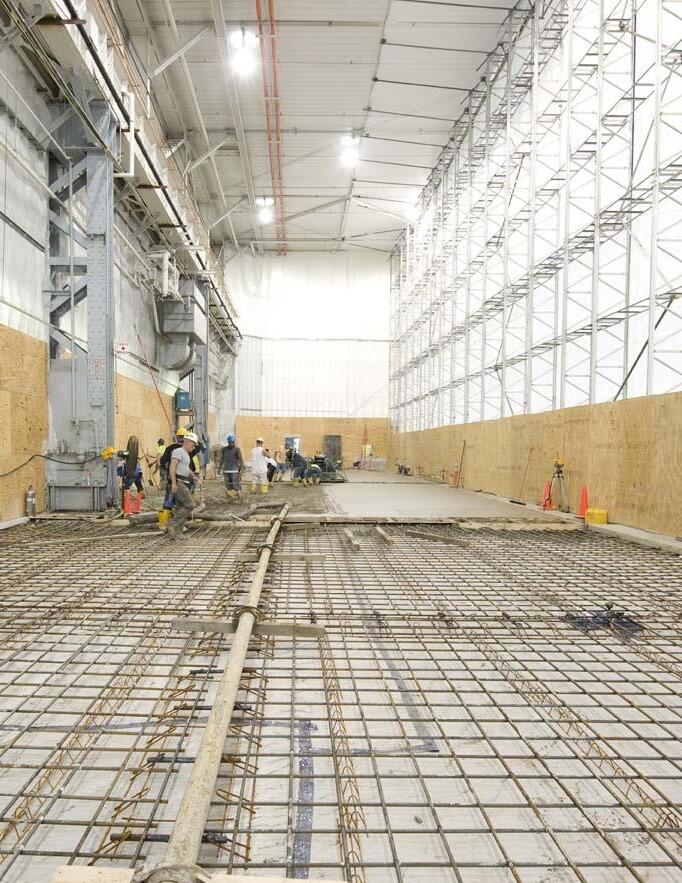
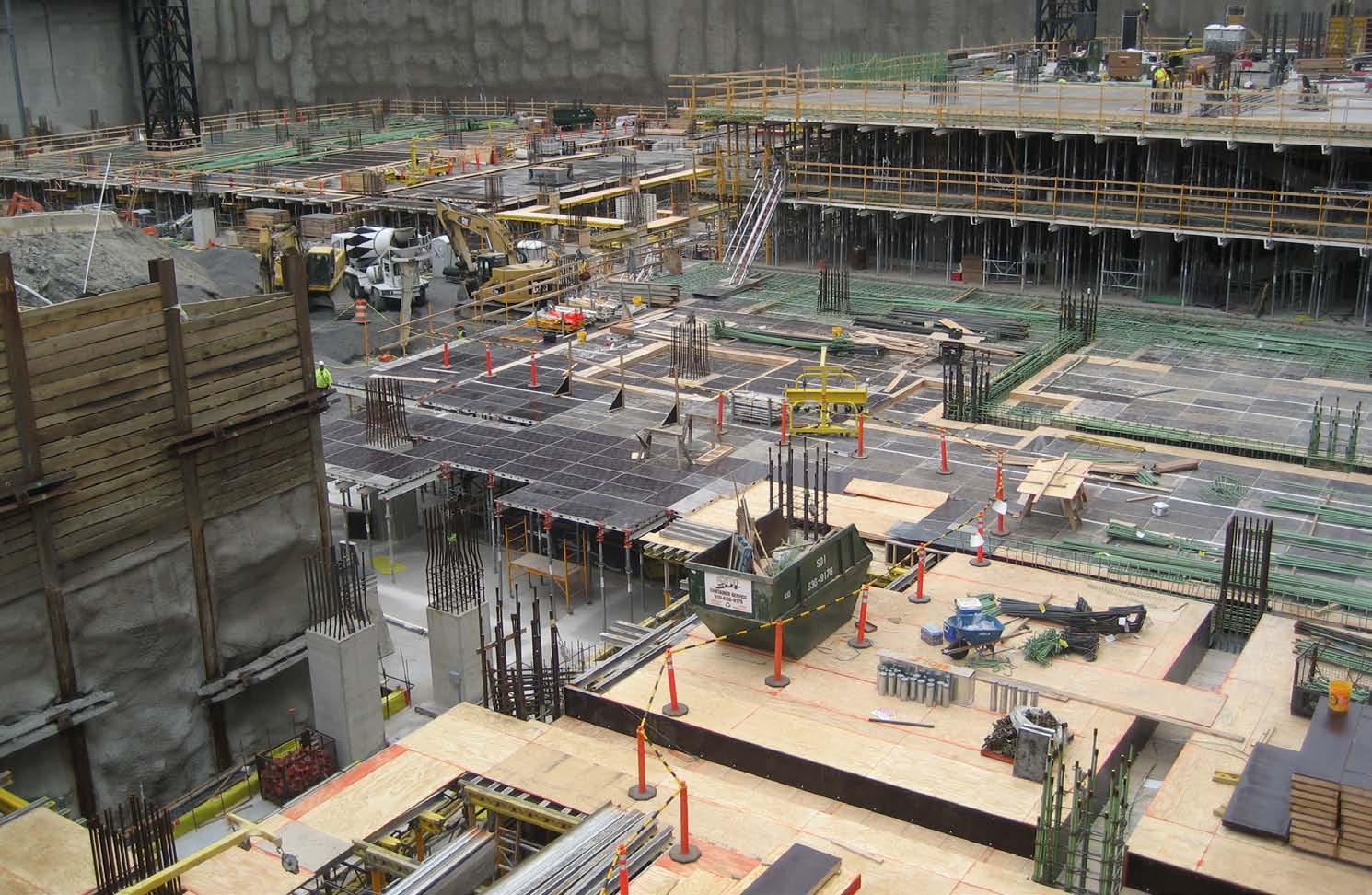
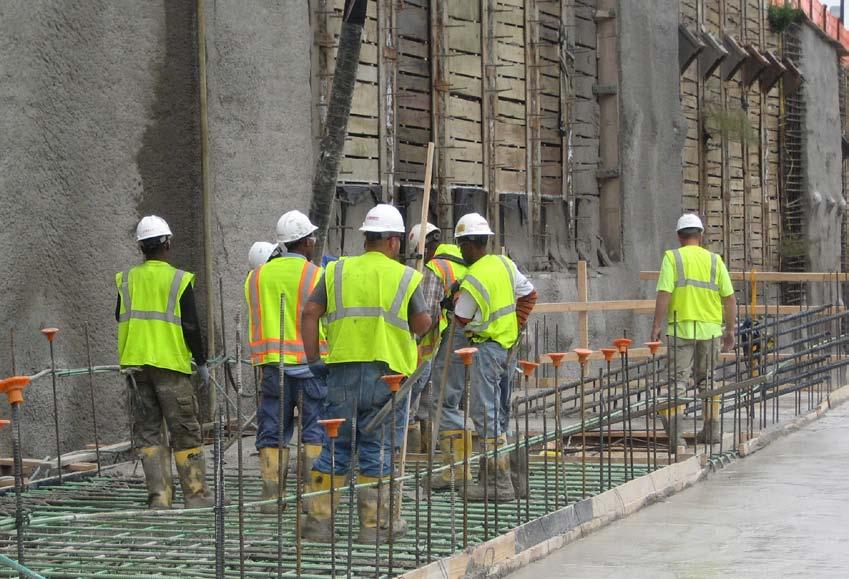
Our people are the backbone of this organization. Keeping them safe is our priority. With the construction of the Residents at Ritz Condominiums, B. Pietrini & Sons was the first to introduce the use of the RCS P Climbing Protection System in the Philadelphia area to bring safety to a new plateau in high-rise construction.


Your business is only as strong as the insurance policies supporting it.

At The Graham Company, we believe every business should be supported by strong insurance policies. That’s why we labor over each word to make sure your policies are rock solid, and to make sure they’re uniquely tailored to meet your needs. We know solid insurance coverage goes beyond the words on a page. So we’re there whenever you need us with experienced teams available 365 days a year. Our mission isn’t just to keep you covered, it’s to keep your company growing, and to keep your employees safe.
At The Graham Company, we put words into action, because we believe actions matter.
215-567-6300 www.grahamco.com
We are pleased to share with you two very special narratives in this issue of Construction Today magazine. The first is a conversation with the General Building Contractors Association new executive managing director, Steven S. Lakin. A Philadelphia native, Lakin returns to his hometown after working in the political, public policy and association worlds of Washington, D.C. and Maryland, and he shares his thoughts on GBCA and vision for the future.
The second narrative highlights the Construction Excellence Awards, an annual event that recently commemorated its 15th anniversary. From 1997 to the present day the program has grown in size and stature, and the crystal obelisks pictured on the cover have become one of the local industry’s most-coveted forms of recognition. The latest installment was held on November 14 in conjunction with the American Institute of Architects ‘Design on the Delaware,’ and more than 300 executives from the construction, architectural, engineering, design and development communities were on hand to celebrate their collective accomplishments.
This issue also highlights some interesting trends taking place in A/E/C circles, most notably Building Information Modeling (BIM). Although BIM technology is certainly not new, it has moved efficient design and construction to the forefront of construction methodology. A prime example is our feature on the Children’s Hospital of Philadelphia (CHOP) and conversation with Doug Carney, CHOP Senior Vice President of Facilities, Real Estate and Construction Management. Don’t know much about BIM? Read the article along with the BIM questions & answers to learn things even some seasoned professionals may not know.
“Enforcement Trends in DBE Fraud Cases” is an informative piece about the increased scrutiny and criminal prosecutions of construction companies that have been awarded government contracts through the Disadvantaged Business Enterprise (DBE) Program. This vignette is must reading for DBE-certified businesses or aspiring contractors. We are also pleased to feature a preview of the upcoming exhibition “The Tool at Hand,” sponsored by the Philadelphia Art Alliance. Opening January 2013, the show will feature the work of 16 contemporary artists who create works of art using only one tool, and brings together an array of talent that might otherwise never cross paths.
Finally, as 2012 comes to a close we want to thank our members, friends and industry partners for your continued interest and support. The construction world is ever-changing, there will be many great stories to tell beyond the following pages and we look forward to sharing them with you in future editions. But for now please accept our very best wishes for a happy, healthy and prosperous New Year – and we hope you will resolve to join us again for the next issue of Construction Today.
Join us on Twitter @GBCA and check out gbca.com/ConstructionToday.com facebook.com/GBCAConstructionToday
Construction TODAY
PUBLISHER Steven S. Lakin
ADVERTISING/SALES Harry Eaby, Paradigm Grafix
CONTRIBUTING WRITERS
Sam Arabia / Sara Archer
Kristin Hynd Jones / Gersil Kay
Steven S. Lakin
DESIGN & LAYOUT Joelle C. Miller
ACCOUNTING Michelle Pinto
EDITORIAL OFFICE
General Building Contractors Assn., Inc. 36 S. 18th Street Philadelphia, PA 19103
215-568-7015 Fax: 215-568-3115
ADVERTISING & PRINTING
Paradigm Grafix 123 Keystone Drive Montgomeryville, PA 18936 215-641-4844
Copyright: CONSTRUCTION TODAY® registered in U.S. Patent and Trademark Office Copyright ©2004 by the General Building Contractors Association. All rights reserved.
Submissions for editorial review should be sent to the above address. Neither the publisher nor any individual associated with any branch of production, nor the advertisers will be liable for misprints or misinformation contained herein.
PRINTED U.S.A.















An accident waiting to happen.
That’s the advantage of having EHD evaluate your risk exposures and the effectiveness of your workplace and job-site safety and management policies
Through loss analysis, employee training, site-specific safety programs, safety committee assistance and more, EHD helps to keep you at work safely And by identifying and reducing your total underlying cost drivers of risk, EHD can improve your bottom line That’s no accident
Contact EHD at 800 544 7292 or visit ehd-ins com EHD has four local offices serving clients throughout central and eastern PA, NJ, MD and DE







1Sam Arabia is manager of BIM Services at Torcon, Inc., a general contractor / construction management firm with locations in Philadelphia PA, Red Bank NJ, and Guaynabo, Puerto Rico.
2Kristin
Hynd Jones is a partner in the White Collar Litigation and Investigations Practice Group of Pepper Hamilton LLP, resident in the Philadelphia office. Ms. Jones represents businesses and individuals facing investigation by federal and state law enforcement authorities.
3Gersil Kay, IESNA, AIA/HRC is president of Conservation Lighting International. Ms. Kay has been working since the age of 12 and is the second-generation involved in the family’s commercial electrical contracting business.



4Sarah Archer is chief curator at the Philadelphia Art Alliance. Her articles have appeared in the Journal of Modern Craft, American Craft, Artnet, Ceramics: Art and Perception, Hand/Eye Magazine, Modern
.
, Studio Potter, and The Huffington




YCC Annual Toy Drive to benefit Northern Children’s Services.
Anthony Naccarato and Fran Pietrini
John Murphy, Meg Moss, and Bill Cobb
Sean Healy and Greg Stewart
Providing a highly trained, drug-free workforce specializing in the erection of:
Providing a highly trained, drug-free workforce specializing in the erection of:
Structural Steel for Buildings and Bridges
Structural Steel for Buildings and Bridges
Structural Steel Barjoists, Trusses and Metal Decking for All Floor and Roof Systems
Structural Steel Barjoists, Trusses and Metal Decking for All Floor and Roof Systems
Structural Precast Concrete for Buildings, Parking Garages and Bridgeways
Structural Precast Concrete for Buildings, Parking Garages and Bridgeways
Pre-Engineered Building Systems in their entirety
Pre-Engineered Building Systems in their entirety
Erection and Modification of Communication Towers, Tower Cranes, Material and Personnel Hoists
Erection and Modification of Communication Towers, Tower Cranes, Material and Personnel Hoists
Installation of All Types of Metal and Pre-Fabricated
Installation of All Types of Metal and Pre-Fabricated
Masonry Curtain Wall Systems, and Dryvit Wall Systems
Masonry Curtain Wall Systems, and Dryvit Wall Systems
Exterior and Interior Metal Wall Panels
Exterior and Interior Metal Wall Panels
Installation of Architectural Metal Windows, Window Walls, and Entrance Ways
Installation of Architectural Metal Windows, Window Walls, and Entrance Ways
Chain Link, Ornamental Iron and Hollow Metal Fencing
Chain Link, Ornamental Iron and Hollow Metal Fencing
Metal Storage Racks of All Types
Metal Storage Racks of All Types
Installation of All Types of Steel Roll-Up Doors, Sectional Overhead Doors and Security Screens & Gates for Commercial and Industrial Use
Installation of All Types of Steel Roll-Up Doors, Sectional Overhead Doors and Security Screens & Gates for Commercial and Industrial Use
GBCA WELCOMES STEVEN S. LAKIN
Sitting down with GBCA’s new Executive Managing Director
By Author
Earlier this fall the General Building Contractors Association welcomed Steven S. Lakin as its new Executive Managing Director. Lakin has long worked with and for construction industry interests, and supplemented his industry knowledge with professional experiences that include working for two Members of Congress, serving as a Presidential and Gubernatorial appointee, and lobbying elected officials via his former government and public affairs businesses in Washington D.C. and Annapolis, MD.
Construction Today® recently sat down with Lakin to learn more about GBCA’s new chief executive.
Since arriving from Annapolis you’ve referred to being in Philadelphia as a “homecoming.”
Do you have local roots?
lakin: I was born in Philadelphia and lived here until the age of 12. My father owned and operated a drug store in Center City on the southeast corner of Broad and Locust Streets, and every Saturday I would work alongside him in the store. Now 40 years later I’m living and working in the shadow of where I spent a very memorable part of my childhood. I’ve come full circle; I’m home again and very happy to be here. What are your impressions of the city compared to how you remember it?
It’s been said the more things change the more they stay the same, and I think this is true to the extent that the culture I
left behind is fairly intact. The city is still synonymous with the Liberty Bell, cheesesteaks and soft pretzels; most of us still live and die by our beloved Phillies, Flyers, Eagles, Sixers, and we look to our history as a source of inspiration and pride.
On the other hand the city has undergone a noticeable transformation, and I’m not referring to the skyline – although that’s changed as well. In my view, Philadelphia has become more vibrant, culturally diverse and economically entrepreneurial than ever before. To coin a phrase from the Chamber of Commerce, it is a “region on the rise.”
What drew you to the Philadelphia construction industry in particular?
I wasn’t actively looking to return to Philadelphia, it just unexpectedly happened. For the better part of my career I’ve had many relationships with the commercial building and construction industry. It is a terrific business for which I have great affinity and respect. So when I learned there was an opening to run a construction industry trade association in my hometown, the oldest trade association in the United States no less, I was intrigued. Then when I heard all the details I was even more enamored by the thought of leading a transformative process that includes among its principle goals helping member companies increase market share, creating business opportunities, fostering
external environments that support economic growth and prosperity, and ensuring a value proposition for the stakeholders. The entrepreneur in me knew this was too good a challenge to pass up, and fortunately GBCA’s Board of Directors thought I was worthy.
What were your initial impressions of GBCA?
GBCA member companies are by-andlarge not unlike most construction companies or any business that has struggled to survive these unprecedented economic times. Most find a way to endure; they work smarter and do what they can to keep key employees without sacrificing other aspects of the business. And while this industry has a lot of experience riding out an economic down-turn, the one difference between then and now is that the economy we’re experiencing is likely the ‘new normal.’ Things may never be as they were, and so it’s incumbent upon GBCA companies to adapt their business models to the current economic reality.
Now more than ever it’s important for members to engage in GBCA and take advantage of the opportunities that we can provide such as education, training, networking and advocacy to help them gain a competitive edge in the marketplace.
GBCA has a number of committees to involve member companies in the Association, and you’ve had a chance to see each of them in action. What is the role of committees in advancing the interests of member companies?
The first committee meeting I attended was the Young Constructors Committee (YCC), and I was very impressed by the enthusiasm and energy in the room. These professionals are the future of the industry and it’s vitally important we actively engage them in association activities, so that when it’s ‘their time’ they can assume leadership roles not only within GBCA but also throughout the industry.
But I’ll go a step further and say I think all of the committees deserve our full support. Sure we want to develop leaders for tomorrow, but it’s just as important to bring all of the stakeholders together to share ideas and experiences, and devise solutions for the greater good. The one characteristic about GBCA that is most

“I want GBCA to reach a point where we are considered the thought leadership for the region’s commercial building and construction industry.”
striking to me is that there’s a strong commitment from the members to not only participate in activities that support their individual companies, but they are equally if not more passionate about working collaboratively to ensure the health and wellbeing of the industry -- even though in many instances they are competitors.
What are you most looking forward in the association’s future?
I want GBCA to reach a point where we are viewed as the thought leadership for the region’s commercial building and construction industry. When issues arise at City Hall pertaining to our industry I hope one day the first instinct for people -- from the Mayor to City Council, to department heads and others -- will be to call GBCA and solicit our input about how their decisions impact our industry. I want owners and developers to recognize we have the institutional and intellectual capacity, both in-house and through our members, to support them as well. And hopefully in time, we can develop the necessary relationships to make this goal a reality.
There’s a lot to do and we have a long way to go, but there’s one thing I know for sure. We have a great organization with a dedicated and supportive board of directors – and a staff that is genuinely committed to the mission. With this much going in our favor I wouldn’t bet against us.
GBCA Executive Managing Director Steven S. Lakin












BIM:
EXPLORING THE PROCESS OF BUILDING INFORMATION MODELING
By Sam Arabia

You’ve no doubt heard it and maybe even felt some dread about it; you’ve probably sensed the tremors. But it shouldn’t come as a surprise. Building Information Modeling (BIM) is no longer on the horizon or around the corner; it’s here. BIM has fulfilled what everyone has predicted over the years - BIM is here to stay. The hurdles of industry standards and lack of expertise have become a thing of the past. When it comes to modern-day building techniques, those who do not adapt to the demand for BIM will find themselves at both a performance and competitive disadvantage.
Torcon, Inc., like other Construction Managers (CM) competing for major commercial, institutional and industrial projects, has committed itself to maintaining a lead role in the ongoing evolution of BIM. BIM technology has moved to the forefront for efficient design and construction of consistently high quality projects. The company views BIM as a holistic process in construction. Torcon uses BIM and is committed to expanding its use because it allows the company to better serve its customers and manage projects more effectively and efficiently.
BIM is not a program. BIM is not a person. BIM is a process. A common misperception about BIM is that it is a marketing tool with little value other than vibrant pictures of mechanical, electrical and plumbing (MEP) systems, or BIM is limited to 3D MEP coordination. While BIM had its
beginnings in the coordination of projects and has proven its value time and again, it has evolved into an even more powerful process. BIM allows contractors to embrace efficiencies in all phases of a project from pre-construction to turnover. This level of increased collaboration involving all project participants will ultimately result in consistent reduction of project time and cost.
“We
are transitioning from Building Information Modeling to Building Information Management.”
In certain areas of the country BIM has become a necessity from the very start of a project. An example of this can be found in major metropolitan U.S. cities that require projects of 10 stories or more to digitally file 3D Site Safety Plans for approval. The building departments of these cities use BIM software to virtually tour the construction site prior to any work being started. Its benefits include increased site safety, faster approvals, and better service with fewer visits to building departments.
This concept of enhanced visualization and the ability to virtually tour the construction site has meaningful advantages. The BIM software on the market today is technologically advanced and powerful. Software such as Revit and Navisworks

are used to create conceptual models that allow the user to capture a vision of the project prior to construction that was previously left to the imagination and creative writing. The visual power of a model depicting the construction process has become invaluable to both potential customers and clients.
The BIM model has many uses even before the project breaks ground. It has been effectively proven the most cost effective time to enact any design changes is at the earliest stages of the project. Not only do early design changes avoid change orders, they avoid costly and time consuming redesign. The BIM process embraces and fosters collaboration. The user develops a BIM pre-construction report which is used to identify constructability issues, potential requests for information (RFI), and gauge the level of effort needed to complete the project. The ideal point to complete this task is prior to 100 percent CD’s. When the report has been shared in a collaborative environment, many of the constructability issues are resolved in the follow-up BIM Construction Issue Report and publication of the CD’s. The value to the customer and to all parties involved in the project, by resolving vast numbers of RFI’s before they even happen, is both obvious and incalculable.
Much has been written about 3D MEP coordination and clearly it has been the backbone of any BIM effort for quite some
time. However it bears repeating that BIM coordination is so much more effective than a traditional 2D line-based effort. All of us have either been involved with or seen a 2D line-based coordination drawing. In a project ultra-rich in MEP activity such as a laboratory or healthcare facility, the process is extremely complex and time consuming. The onus to resolve conflict in coordination has always been with the trades. It has been estimated that even the very best coordinators will only identify 70 to 80 percent of conflicts in a 2D coordination process. A 3D BIM coordination effort has a distinct advantage over 2D. With the aid of the BIM model the user can identify all of the conflicts in a fraction of the time, making the team aware of each problem so it can be identified and resolved.
“As BIM evolves we are seeing the advantages of 6D BIM and the adaptation of a facilities maintenance model.”
The use of the model moves with the project from the coordination phase to the construction phase. The model can be viewed as a “contract for space.” Each trade discipline has agreed where they can comfortably install their portion of the project and by following this prior designation of space, change orders and costly delays are avoided. The fully coordinated
BIM model is in place for quite some time before actual construction takes place. Should a conflict arise during field installation, the model is consulted by all trades. The model will be used to review the “contract for space” previously agreed upon. Everyone holds to the parameters of the model, allowing contractors to reduce unnecessary change orders and trade delays that give rise to the old school mentality of the one who installs first wins.
Because of the accuracy in the BIM model, further efficiencies can be found when the team visualizes the coordinated space and is able to take advantage of opportunities for pre-fabrication, preassembly and modular construction. It is important to recognize that all of the activities in a construction project are still the same. In a BIM project the team can seek efficiencies by changing the order of the tasks. An example of this is found in preassembly. As the structural steel is being erected, the overhead MEP systems can be prefabricated and pre-assembled into racks offsite. The accuracy guaranteed by the model allows for a seamless installation of the MEP racks in a fraction of the time it would take to install the MEP systems in the traditional manner. This new way of doing an old task has many more benefits than just saving time. The preassembly of overhead MEP systems can improve quality, safety, and productivity over the traditional method.
BIM model used in coordination at Brookhaven National Laboratories Long Island NY.
BIM technology has progressed to the point where we can now adopt the 4th dimension of BIM into our workflows. 4D
BIM is the integration of the project schedule linked to the model. All of the current industry BIM software is interoperable with the major scheduling software in use today. By importing the project schedule and linking it with the model we have a incredibly powerful visualization tool at our disposal. A 4D BIM simulation allows one to take a year or two of construction and compress it down to a few minutes, seeing the project built virtually before our eyes. This process enables owners and CM’s to visualize among other things gaps in the schedule, safety concerns and anticipated manpower allocation needs well in advance of the event. And giving customer the ability to visualize the progression of the project in advance eliminates the element of surprise and fear of the unknown. The BIM schedule simulation has proven its value time and again.
The BIM model is also being used in combination with estimating and project cost control. The fifth dimension, or 5D BIM, takes the cost data of objects or geometry linked within the model and leverages it to track productivity and seek efficiencies. Quantity Take Off (QTO), from the model allows the estimator to quickly and efficiently verify design changes and determine how it affects the project budget.
As BIM evolves the industry is seeing the advantages of 6D BIM and the adaptation of a facilities maintenance model. At
this point the industry is transitioning from Building Information Modeling to Building Information Management. As a rule of thumb only 20 percent of a building’s lifecycle costs are associated with construction, the other 80 percent is found in maintenance and operation of the facility. Many owners are finding value in utilizing the BIM model given to them at turnover, and having it linked to their existing facility maintenance program. The use of this model by maintenance personnel has enhanced the value and savings captured through BIM during construction, and extrapolated the results into the facility operations lifecycle.
A BIM based workflow fosters project teamwork and communication. For example, Torcon Inc. utilizes its own proprietary servers to store information and collaborate with project models. Every partici-
pant has secure access to specific projects, allowing them to view and cooperate with the entire design team. Each trade working in a silo type environment is a thing of the past. While each discipline maintains an individual model of their own responsibilities, the integrated model stored and maintained on the central server adds value to each project. Both owners and construction professionals agree this level of collaboration and communication is the key to success.
At its core, a BIM-based workflow is a holistic approach to construction, and as compared to the way things were done in the past there is no comparison. Looking at project construction as a process, from pre-construction to turnover and beyond, BIM allows users to visualize how to consistently produce the high quality facilities customers are looking for and expect.


2
3

1 - BIM model of at Brookhaven National Laboratories. Long Island, NY.
BIM: QUESTIONS & ANSWERS
Q: A:
Are there percentages that can be expected in the ratio/breakdown of upfront cost versus back-end savings?
Whether you outsource BIM work or establish an in-house department, there are upfront costs to starting a BIM program. The amount of upfront costs can vary depending on the software you choose and the learning curve for personnel. The savings recognized by BIM are found within the project. A study by the Stanford University Center for Integrated Facilities Engineering (CIFE) reported the following savings data:
• Up to 40% elimination of unbudgeted change.
• Cost estimation accuracy within 3%.
• Up to 80% reduction in time taken to generate a cost estimate.
• A savings of up to 10% of the contract value through clash detection.
• Up to 7% reduction in project time.
Implementing a BIM program will increase savings on the project, but not every project is a BIM project. Start small and build on your success. Once the major learning curve is over you can expect to see results comparable to the percentages described above.
Q:
What role do you see BIM playing in the pre-construction / estimating process in the near future? How can estimators prepare themselves for this change? Will quantities be produced automatically from the BIM drawings?
A:
The role that we foresee BIM playing in the pre-construction and estimating process is not only large, but it’s also increasing. The most cost effective time to enact any change in the design is at the earliest stages of the project. We rely heavily on BIM pre-construction model studies to reduce the amount of potential RFI’s a project can have. We also look to the BIM pre-construction model to gain a greater understanding of the design intent, to reduce or eliminate constructability issues before they cause delays. Our traditional roles remain the same as do our tasks,
the only difference is that BIM enables us to find efficiencies. The BIM model will never make an estimator’s job obsolete. The level of knowledge and skill that comes with an estimators years of experience cannot be replicated by an intelligent model. The 5D (estimating) phase of BIM simply allows for a greater sense of control and speed. Quantity Take Off (QTO) estimates can be verified in fractions of time as the design moves forward and evolves. Establishing a data-base of estimating costs though a BIM model allows greater comfort in the cost models generated for projects with little or no information other than a generic design concept and mass model form. We don’t see an estimators job changing, we just see BIM as another tool in the toolbox to promote greater accuracy and success.
Q: A:
Effective implementation of BIM requires active participation of field staff, particularly superintendents and foremen. With this in mind, what additional skills will these individuals need in order to effectively execute construction from the BIM model?
Effective implementation of a BIM model, from coordination to construction, is a team effort. Everyone from the project manager to field personnel must be involved. During coordination the model is in essence reserving space for each trade discipline. Navisworks offers a free program called Navisworks Freedom®; it’s available for anyone to download and it does not require a license fee. This program enables any project participant to view the model and use it to install the systems at the predetermined and coordinated location. It also provides an enhanced view of the other trades work and how it affects the installation sequence. Basic computer knowledge and some minor training is required, however most users can effectively navigate a model after approximately one day of training. A “BIM 101” class, that covers the basic principles of BIM is also very beneficial.
In order for an owner to take advantage of 6D BIM, is there additional work product and
or services required of the design and construction teams?
A:
In 6D BIM we see the transition from Building Information Modeling to Building Information Management. The prerequisite for each of these is the information. Achieving a 6D facilities model as a deliverable allows us to place the information at the right time in the project. For a 6D facilities model we need the information (i.e., O&M manuals, model numbers, website information, cost information etc.) embedded in the model or in an Excel sheet that we can then link to the model and install in an existing FM program. This process is best suited to occur during the design phase. Executing the request for information at the end of a project is labor intensive and much less efficient. We still need to perform all of the tasks as before, however for a 6D model we embed the information electronically as compared to when we delivered it to an owner’s FM manager in reams and reams of paper.
Q: A:
We can see obvious value in a BIM program. If you don’t have one set up now, where do you start? What are the cost estimates for starting a BIM program?
All organizations large or small will have to invest in their infrastructure and training. A good place to start is the GBCA office. They offer a series of BIM training classes that have proven their value from general understanding to advanced BIM process. Software packages like Revit, Navisworks, and AutoCAD are a must. They can be purchased in a package for approximately $10,000. A good computer system can cost around $2000. The most important thing to remember when beginning a BIM program is to start small and build on your success. Choose the right project, one you’re familiar with building, and not too big. Start small with 3D MEP coordination and clash detection. As you gain experience and success you will become more comfortable and branch out. BIM was once considered the way of the future, now it is the opportunity of the present.
PHILADELPHIA’S BELLWETHER
Facilities, Real Estate & Construction at The Children’s Hospital of Philadelphia
If the world that exists is a direct result of our thinking, then it cannot be changed without changing our thinking. The Philadelphia landscape is certainly in flux, but is the collective thinking of our industry changing along with it? The Children’s Hospital of Philadelphia (CHOP) is one of the largest consumers of construction in the region. The longtime corporate citizen is looking at continued financial investment in the city together with how to integrate its expansion into the fabric of the urban environment. With the massive Ambulatory Care Center project under construction, and a 2031 vision plan in the works, it is easy to look to the institution as a bellwether for trends and changes ahead.
What does not change? Safety is the filter through which everything at CHOP is run.
“Safety is what we strive for throughout the whole enterprise,” says Doug Carney, Senior Vice President of Facilities, Real Estate and Construction Management at CHOP, “and that will not change.” In fact, when the Ambulatory Care Center was being proposed, an in-house team of architects and engineers developed nine selection criteria they felt aligned most closely with the mission of the organization. Safety ranked first.
“CHOP must have access to quality labor and a safe workforce,” says Carney. It is critical “we have access to workers that can work safely, keep the jobsite they’re in
safe, but also to keep our patients and families safe.” Workers must also demonstrate a high level of skill to complete very complex projects, as compared to the general construction industry as a whole. “That’s what we seek when we look to General Building Contractors Association members to complete our projects,” says Carney.
“The most important thing GBCA can do is ensure that craft integrity and professionalism of trades is preserved, with growth opportunities for a diverse workforce.”
For instance, the fact that the Carpenters Apprentice School of Philadelphia and Vicinity is providing Infection Control Risk Assessment (ICRA) training is important – infection control and reduction is taken seriously at CHOP. “We want best of class ICRA protection and it’s valuable to us that when a carpenter shows up he understands the importance of it,” says Carney.
But are other owners aware of the investment in safety and training that GBCA members offer as a matter of course? The answer might be “no.” And so, in this climate of change, it is critical to make all owners aware of the training centers GBCA contractors invest and participate in. Just
look at how well a value proposition of training and safety aligns with CHOP’s culture. Carney mentioned his opportunity to visit training centers throughout the region and commented on how systematic, current, and advanced the training is at the GBCAaffiliated centers. He said other owners should be encouraged to do the same.
What does change? While safety will always rank first, plenty is changing. Just look at numbers two and three of CHOP’s selection criteria when awarding a project - quality of team and cost, respectively.
General contractors and construction mangers have long been aware that different owners want different things and have different values. So in the past, the challenge has been to figure out what the owner wants and mirror those values. However, the longheld values of many owners are changing; and so the question today is whether general contractors and construction managers can keep up?
The most obvious variable to look at is cost. While not the only factor in driving owners’ decisions, there is no denying the cost of construction has a dampening effect on projects. “If construction costs were lower we would not just save construction dollars, we’d do more work, and do it faster and have more funds to spend on direct patient care expenses,” says Carney. After all, we all live in a marketplace. Even healthcare is under tremendous pressure to provide care and safety at a competitive, marketbased cost. The challenge for GBCA and the trades is to provide the level of investment in safety and training they currently provide, at a competitive price.
Another change variable is technology. “We are using BIM,” says Carney emphatically. In fact, CHOP is investing in a fulltime Building Information Modeling (BIM) manager. Doing so will allow the institution to use BIM capabilities full-time for facility management, as well as on small scale construction projects. “It will make us even more systematic on facility management and maintenance and it will be an important construction tool for projects we do inside the hospital,” he said.
CHOP is now requiring all new projects to feature a completely integrated model to be delivered by the construction manager.

center: Douglas Carney, Vice President of Facilities, Real Estate & Construction Management at CHOP.
right: Safety was ranked first in establishing criteria for selecting a general contractor for the Ambulatory Care Center.
Furthermore, CHOP is in the process of deciding the data they want delivered with this model, in addition to including some intelligent facility management capabilities. CHOP is quickly headed toward using BIM models 100 percent of the time, even within existing facilities.
How can GBCA change with you? “To me the most important thing GBCA can do is to work with members to ensure that craft integrity and professionalism of the trades is preserved, with growth opportunities for a diverse workforce,” says Carney. “And that CHOP is provided with all of the things that we’ve been looking for, and to get them at a competitive price.” Carney says CHOP understands that high levels of skill and safety have cost implications, but he maintains that it is absolutely critical costs are in line with other major cities.
Another area of importance is CHOP’s dedication to continuing education. Carney describes CHOP’s work with a London firm
to develop an interactive tool (the first of its kind) which will allow the institution to develop “what if?” scenarios for a 20-year period, all on a building-by-building basis.
“We are just starting in earnest a master plan, from how patients with sick children get to the hospital and where they park, to utility infrastructure and types of care that will be provided,” says Carney. It involves a meticulous level of detail and an understanding of technology and complex interactive tools.
Observing the Changing Landscape Much of Carney’s insight into the industry comes from growing up in the area, and he proudly proclaims “I spent most of my professional career in Philadelphia.” Drawn to architecture, Carney has always been interested in the built environment and creative process. “I am most energized by the design and construction industry – process and project management, where we turn ideas into buildings.”
top: The Ambulatory Care Center at the Children’s Hospital of Philadelphia.
As senior vice president of facilities, real estate & construction management, Carney has three main functional areas that report to him. First is the project management group involving planning and real estate. The second group is building systems operations, “They keep lights on and utilities and systems well managed.” Finally, CHOP has its own in-house facility services group, which includes the specialty trades group that maintain the buildings. Carney estimates
the total number within the three groups is between 130 to 135 people.
“The challenge of any leader is to provide linkage from day-to-day operations to the strategic vision,” explains Carney. “The great thing about CHOP is how incredibly aligned everyone here is on the mission of returning children to health. It has a galvanizing effect on people who work here. All that we do fits with our strategic vision to provide good care to children,” he says.

Building on this idea, Carney sees the same opportunity for GBCA. Aligning GBCA and the trades to recognize a mission of safety and training may have the same galvanizing effect on the industry. “I think Philadelphia is a forward-looking city and it is especially exciting to be involved with real estate and construction.” Just look at Deputy Mayor for Economic Development and Commerce Director Alan Greenberger. “His vision anticipates a lot of change for Philadelphia construction icons. And by that I mean long time firms who have been leaders of Philadelphia construction who have historically driven growth in the region. We are in the middle of an exciting time, a time that requires firms to become more nimble. It’ll be interesting to see which institutions can keep up.”
Setting Trends. It is important to mention that woven into this conversation about CHOP is an ongoing committment to education. Carney makes repeated reference to his construction management students at Drexel University’s Goodwin College. As an Assistant Clinical Professor, Carney and his CM students cover construction from “soil to roof” as well as examining the breadth of issues CM students would come across in their careers.
The construction industry is technical, complex and fast-paced, and you need counsel that can get up to speed fast and keep moving. For over 20 years, Cohen Seglias has provided clients representation for virtually every type of construction-related issue. Our experience and insights enable us to anticipate client needs and help mitigate risk.
Need assistance with a construction issue? We’ve got it nailed.
United Plaza, 19th Floor 30 South 17th Street Philadelphia, PA 19103 (215) 564-1700 cohenseglias.com
Blogs: www.constructionlawsignal.com www.fedconblog.com
“Working with CM students keeps me fresh and current,” he says. Carney is proud of the men and women in the program for not only their engagement, but their “absolute desire” to end up in the construction industry. In fact, Carney and CHOP believe so strongly in the institution’s mission to find quality builders that CHOP’s Enterprise section currently features five Drexel co-ops. GBCA members, if they are not already aware, should look to the Drexel CM program as an investment in the industry’s future, and as an opportunity to get to know some of the best and brightest early.
For those who are not familiar, the term bellwether originates from the notion that the movements of a flock could be foretold by a bell ringing around a sheep’s neck even before the flock was in sight. There are several entities around Philadelphia including CHOP, the City of Philadelphia, and even Drexel University’s Goodwin College of Professional Studies that are sounding that bell. Are you listening?
THE RIGHT TOOL for the JOB
By Sarah Archer
Builders know that having the right tool is essential. The best quality materials are only as good as the skilled hands that shape them. While Americans revere the generations of workers who built our cities, bridges, and highways, we also have an educational system that still adheres in part to the Ancient Roman division of disciplines ars liberalis, the liberal arts, deemed necessary for the education of a citizen, and the ars techne, manual skills. The implication that builders and citizens need different training and different tools to do their jobs reflects a belief that working with one’s hands and working with one’s mind are somehow different. With the imagination and problem-solving skills required of designers and builders today, we know that this concept is out of date. Education has to catch up, and our stereotypes about manual training should yield to a new understanding of how crucial skilled work is to our country’s infrastructure and economic future.
The Philadelphia Art Alliance will have an exciting opportunity to open a dialogue on this topic come January when an ingenious exhibition, The Tool at Hand, travels to Philadelphia from the Milwaukee Museums of Art where it was organized by Chipstone Foundation Curator Ethan
Lasser. The Tool at Hand features the work of 16 contemporary artists who answered a challenge to create a work of art using only one tool. “For centuries, artists and artisans have felt a particularly intimate connection to their tools. Tools have been described as extensions of the body, and in certain cultures they have been revered as sacred objects with lives of their own,” says Lasser. The tools selected range from low to high tech and include paintbrushes, hammers, saws, dental drills and customized 3D printers. The results are as varied as the creative minds and inventive hands that shaped the works of art.
The Philadelphia Art Alliance’s The Tool at Hand exhibition speaks to the roles of design, craft, and skilled trades.
The Tool at Hand brings together artists who work in an array of media and might otherwise never cross paths: silversmith Ndidi Ekubia, woodworker David Gates, painter Joy Garnett, and fiber artist Liz Collins are all connected here through their unique approaches to this experiment. Above and beyond the aesthetic

~ 1 ~
The exterior of the Philadelphia Art Alliance.
Originally built in 1906 as a private residence, the building features carved sandstone, an original Palladian stained glass window, hand-carved wood paneling, and ironwork by Samuel Yellin.
~ 2 ~
The upcoming Tool at Hand Exhibition at the Philadelphia Art Alliance. The exhibition opens January 2013.
~ 3 ~
Ndidi Ekubia
Lives and works in London Connection Vase
Sterling Silver
5 x 5 x 7.25”
~ 4 ~
Mark Lindquist
Lives and works in Quincy, FL Dowel Bowl
Wood dowels, glue
36” diameter x 5”
~ 5 ~
Michael Eden
Lives and works in Cumbria, UK
Maelstrom VII
Nylon with mineral coating
and formal achievements of the works on view, the exhibition and its theme touches on the central concerns of the PAA and speaks to the ongoing conversation about the roles of design, craft, and skilled trades in American secondary and higher education today. Each artist interpreted the challenge in unique and sometimes surprising


ways. Finnish ceramist Caroline Slotte reverse-engineered a “handmade mug” by meticulously carving patterns into the surface of two inexpensive, mass-produced coffee mugs from a department store. American woodturner Mark Lindquist used glue and his own hands to construct a dazzling bowl made from thousands of


small wooden dowels.
This exhibition is especially meaningful for the Philadelphia Art Alliance, which has presented the work of artists and designers in a wide variety of media from ceramics and jewelry to textiles and sculpture since its founding in 1915. Each year the PAA presents up to 12 new exhibitions
featuring the work of emerging and established artists. Rather than understanding craft as a class of objects, the PAA encourages visitors to consider ‘craft’ as a verb. This broader definition means that exhibitions encompass a range of topics and types of work, from useful and decorative objects to sculpture and installations. The diverse program of exhibitions, inspired by the PAA’s setting in a masterfully crafted domestic space, is communicated to visitors in engaging and unexpected ways.
The historic mansion PAA calls home was designed by Charles Klauder of Frank Miles Day & Brothers Architects, and constructed in 1906 for Samuel Price Wetherill, the father of Philadelphia Art Alliance founder Christine Wetherill Stevenson. Stevenson lived in the build ing until she donated it to the PAA in 1926. The Wetherill mansion is listed on the National Register of Historic Plac es as part of the Rittenhouse National
The tools used include paintbrushes, hammers, saws, dental drills and customized 3D printers.
ask where will the next generation of artisans come from? The PAA’s hope is that this exhibition and the programs presented in conjunction will inspire educators, administrators, business owners and local leaders to help keep art, craft and design resources available to students at every level, and think creatively about what a “tool” looks like in the 21st century.
The exhibition features works by Helen Carnac, UK; David Clarke, UK; Liz Collins, USA; Chad Curtis, USA; Michael Eden, UK; Ndidi Ekubia, UK; David Gates, UK; Joy Garnett, USA; Lisa Gralnick, USA; Tavs Jorgensen, UK; Mark Lindquist, UK; Beth Lipman, USA; Gord Peteran, Canada; Caroline Slotte, Finland; Hongtao Zhou, USA



Areas of Practice
Law

Register of Historic Districts. Designed in the style of an Italian Renaissance Palazzo, the exterior of the building is clad in carved sandstone and the interior retains much of the original features. Ornamental plasterwork, an original Palladian stained glass window, hand-carved wood paneling, and ironwork by Samuel Yellin are fine examples of Philadelphia craftsmanship and speak to the PAA’s special focus on craft and design.
The PAA couldn’t be more pleased to host this exhibition on its North American tour. Philadelphia has long been a city of makers and builders, but like many US cities its manufacturing base has drastically diminished since the 1960s as the city’s economic base has migrated to higher education, medicine, and service industries. Yet the challenges of a decaying infrastructure, environmental conservation, and the need for sustainable local production will all prompt smart designers and builders to
Law


BUILDING QUALITY OF LIFE

THE GBCA CONSTRUCTION EXCELLENCE AWARDS LOOKING BACK ON 15 YEARS OF BUILDING EXCELLENCE
The General Building Contractors Association’s
Annual Construction Excellence Awards program began in 1997 to recognize the skill and professionalism of its contractor members and their employees. While the program has undergone few changes over the years, the mission remains the same.
Held in conjunction with the American Institute of Architect’s 2012 Design on the Delaware event, GBCA recently celebrated the portfolio of Construction Excellence Awards winners that have captured the cultural and economic heartbeat of the region over the past 15 years. From its humble beginnings in 1997 to the present day, this awards program has grown in both size and stature to become one of the local industry’s most coveted forms of recognition.
“It is impossible to look across the Philadelphia skyline without making eye contact with projects constructed by GBCA member companies, and our industry is undeniably proud of its contributions to the landscape of the city and surrounding areas,” said GBCA executive managing director Steven S. Lakin. “GBCA member companies have been building Philadelphia since 1724 -- from hospitals, stadi-
ums, universities, theatres and shopping malls to airports, transit centers, museums, historical sites and high-rise office buildings. Simply put, if there is a construction job of any significance chances are it was (or will be) built by a GBCA member company,” he said.
Construction Excellence Award winners have captured the cultural and economic heartbeat of the region over the past 15 years
The Program The program originally recognized excellence in four areas including commercial, industrial, and institutional building, as well as excellence in craftsmanship. While the awards program still covers these original award areas, it has
grown to acknowledge the importance of green building and the instrumental role of specialty contractors. In fact, the awards program has never been static – it is designed to mimic the patterns of what GBCA member companies build – highlighting transportation and infrastructurerelated projects when stimulus dollars flooded our region, and recognizing more recent developments in Building Information Modeling (BIM) or Integrated Project Delivery (IPD) as more buildings are designed in this collaborative environment.
Entry into the awards program is limited to GBCA members. Participants decide the projects to submit and in which category. The competition process however, is much more industry inclusive. Architects, engineers and building owners are recruited by the contractor to sell the story of the completed project. In return for their efforts, and to acknowledge that without the design and owner communities there would be no construction, the awards program also celebrates the architect and owner.
But what has remained a challenge over the years is comparing “apples to oranges.” With a myriad of building projects, the program has grappled with how to provide the most equitable comparison of diverse projects. For example, how do you compare the conversion of a pier to a park with that of an office building into an apartment complex? The solution is to segregate projects by total cost.
During the past 15 years more than 480 projects have been submitted for consideration, but only a fraction of those were selected to receive awards by an industrywide panel of judges.
The Projects Large projects like the Comcast Center or Citizens Bank Park seem obvious choices for a Construction Excellence Award. Putting aside they are highprofile projects, the complexity in building techniques needed to achieve a floating glass staircase, solid curtain wall or a 24foot below-grade field seem deserving. But many smaller projects have also convinced judges of their building excellence.
There are winning projects like the Peirce College Library 7th floor renovation, which when the building was first
constructed, it had a wooden 7th floor running track open to the 6th floor gym below. Over time, the open space inside of the wooden running track was in-filled with steel framing and concrete to become a complete floor. As a result, the library suffered from uneven floor surfaces, low ceilings, low light, and irregular structural support placement. To remedy this, the contractor was called upon to remove the existing historic terra cotta arch support beams and reinstall them 16 inches higher than their original elevation. The judges recognized the difficulty in working with terra cotta, wood and concrete and unanimously awarded the project for Best Industrial/Institutional Project Under $5 million.
temperature. As a result the cable system had to be tuned one cable at a time during installation, and every 4 months the system needs to be re-tension due to changes in the exterior environment. The contractors committment to helping CHOP achieve a safe and welcoming entryway earned the project an Excellence in Craftsmanship Award.
Look Who Chooses Excellence A look at the owners who have been recognized for their commitment to building excellence is a veritable who’s-who of national and international companies. The projects list includes institutions of higher learning, hospitals, Fortune 500 companies, cultural intuitions, professional sports teams, renowned music and theater companies. Equally as important are the small owners, non-profit organizations, school districts, and religious institutions who join the previously mentioned entities in recognizing that working with a GBCA member means the job will be completed with an unparalleled dedication to excellence.
The Celebration On November 14 over 300 of the region’s most influential firms came to celebrate excellence in quality construction.
There is also the Children’s Hospital of Philadelphia façade replacement, with its innovative point-supported glass sleeve and cantilevered entrance canopy. The entrance canopy is over 70 feet in length and, with the exception of 3 steel trusses, consists of a complex system of engineered glass beams and laminated colored decorative glass. The canopy extends almost 35 feet over the existing driveway. The glass sleeve itself is a 10-story, three sided structure that consists of modular glass units. The cable system, which supports the trusses, had to be engineered so precisely as to incorporate the effects of exterior
In addition to the many building contractors on-hand, GBCA welcomed industry partners from the architectural, engineering, design and development communities who came to show their support. “Your input and collaboration is vitally important to the success of our projects, and we appreciate your roles in helping to bring a vision out of the ground and see it to completion,” said Lakin.
A professional, skilled and competent workforce is imperative to building successful projects recognized by the Construction Excellence Awards. “And so we would be remiss if we did not acknowledge the men and women craftspeople that are the foundation of the construction industry,” he added.
With 15 years of successes now behind it, GBCA is already gearing up for projects that will compete for the crystal obelisks to be awarded at the 2013 Construction Excellence Awards.
CONSTRUCTION EXCELLENCE











J. Bradford McIlvain and Councilman Bill Greenlee.
A guest confers with John Sabia, Jr.
Fran Pietrini
AIA Philadelphia President Keith Mock. The awards program hosted members from the entire A/E/C community. The reception was held in conjunction with
Bob MacIntosh, Emily Bittenbender, Joe Kessler, Anthony Naccarato
Gene Rose, Sean Healy, Dave Russell, Joe Pace
John Defazio, Joe Clearkin and Mike Stepnowski
Sherry McCarty and Jay Quillinan
Jim Smith and friends.
EXCELLENCE AWARDS NOVEMBER 14, 2012











The 2012 Construction Excellence Awards attracted 300+ people from the architecture, engineering, construction and owner communities.
The reception offered a valuable networking opportunity.
AIA’s Design on the Delaware.
Christine Hough, Anne Papageorge, Amanda Weko
Jack Healy and Fred Gerngross
Christopher Lee, Peter Vander Heide and friend.
Brea Sinott, Bill Cobb, Rudy D’Alessandro
Nicole Dress, Christopher Bryant, Keith Mock Terry Webb, William Kenworthy and friend
Geoff Eobstel, Bill Denmark and Peggy Underwood
Jeff Celucci
1997
EXCELLENCE IN CRAFTSMANSHIP
DORRANCE HAMILTON FERNERY
CONTRACTOR: UNKEFER BROS. CONSTRUCTION CO.
OWNER: UNIVERSITY OF PENNSYLVANIA
BEST INDUSTRIAL PROJECT
SUN CHEMICAL WAREHOUSE EXPANSION
CONTRACTOR: JAMES J. CLEARKIN, INC
OWNER: SUN CHEMICAL
BEST INSTITUTIONAL PROJECT
WHIG & CLIO HALLS
CONTRACTOR: LORENZON BROS.
OWNER: PRINCETON UNIVERSITY
BEST COMMERICAL PROJECT
THE WANAMAKER BUILDING, 9TH FL CONTRACTOR: CLEMENS
CONSTRUCTION CO.
OWNER: BRICKSTONE REALTY
1998
EXCELLENCE IN CRAFTSMANHIP MONTGOMERY, MCCRACKEN, WALKER & RHOADS
CONTRACTOR: C. ERICKSON & SONS
OWNER: MONTGOMERY, MCCRACKEN, WALKER & RHOADS
BEST INSTITUTIONAL PROJECT
PHILADELPHIA CORPORATION FOR AGING MEALS DISTRIBUTION CENTER
CONTRACTOR: C.H. SCHWERTNER & SON
OWNER: PHILA CORP FOR THE AGING
BEST COMMERCIAL PROJECT
CROWN CORK & SEAL CO.
HEADQUARTERS
CONTRACTOR: NASON & CULLEN
OWNER: CROWN CORK & SEAL CO.
BEST COMMERCIAL PROJECT HONORABLE MENTION
DICK CLARK’S AMERICAN BANDSTAND GRILL
CONTRACTOR: E.P. GUIDI, INC.
OWNER: DICK CLARK RESTAURANTS
BEST SPECIALTY CONTRACTOR PROJECT
THE APOLLO TEMPLE
CONTRACTOR: NORTHWEST
ERECTORS
OWNER: TEMPLE UNIVERSITY
1999
BEST INDUSTRIAL PROJECT
CORPORATE JET HANGAR CLUSTER
CONTRATOR: E.P. GUIDI, INC.
BEST COMMERCIAL PROJECT
HIGH SCHOOL FOR THE CREATIVE & PERFORMING ARTS
CONTRACTOR: NASON & CULLEN
OWNER: SCHOOL DISTRICT OF PHILA.
BEST INSTITUTIONAL PROJECT
GORE HALL
CONTRACTOR: EDIS
OWNER: UNIVERSITY OF DELAWARE
EXCELLENCE IN CRAFTSMANSHIP
FRANKLIN INSTITUTE
CONTRACTOR: OLIVER SPRINKLER
OWNER: FRANKLIN INSTITUTE
15 YEARS OF CONSTRUCTION
1999
EXCELLENCE IN CRAFTSMANSHIP
HONORABLE MENTION
ONE LOGAN SQUARE
CONTRACTOR: C. ERICKSON & SONS
OWNER: BLANK, ROME, COMISKY & MCCAULEY
EXCELLENCE IN CRAFTSMANSHIP
HONORABLE MENTION
MASONIC TEMPLE
CONTRACTOR: SAFWAY STEEL
SCAFFOLDS CO.
OWNER: MASONIC TEMPLE
2000
BEST COMMERCIAL PROJECT
SAP AMERICA HEADQUARTERS
CONTRACTOR: GILBANE
OWNER: SAP AMERICA, INC.
BEST COMMERCIAL PROJECT
HONORABLE MENTION
GAP INTERNATIONAL CORPORATE
HEADQUARTERS
CONTRACTOR: C. ERICKSON & SONS
OWNER: GAP INTERNATIONAL, INC.
BEST COMMERCIAL PROJECT
HONORABLE MENTION
TERMINAL B/C
CONTRACTOR: TURNER
CONSTRUCTION CO.
OWNER: CITY OF PHILADELPHIA
BEST INDUSTRIAL PROJECT
DOBBS AIRLINE CATERING FACILITY
CONTRACTOR: E.P. GUIDI, INC.
OWNER: DOBBS INTERNATIONAL SERVICES
BEST INDUSTRIAL PROJECT HONORABLE MENTION
DUPONT PHARMACEUTICALS
BUILDING
CONTRACTOR: TURNER
CONSTRUCTION CO.
OWNER: DUPONT
BEST INSTITUTIONAL PROJECT
CLEVELAND TOWER, PRINCETON UNIVERSITY
CONTRACTOR: LORENZON BROS. OWNER: PRINCETON UNIVERSITY
BEST INSTITUTIONAL PROJECT HONORABLE MENTION
NEW KENNELS, PA SPCA
CONTRACTOR: SCHAEFER & CO.
OWNER: PA SPCA
EXCELLENCE IN CRAFTSMANSHIP WOLF, BLOCK, SCHORR & SOLIS-COHEN CORPORATE OFFICES
CONTRACTOR: C. ERICKSON & SONS
OWNER: WOLF, BLOCK, SCHORR & SOLIS-COHEN
EXCELLENCE IN CRAFTSMANSHIP HONORABLE MENTION HEREFORD INLET LIGHT STATION
CONTRACTOR: HAVERSTICKBORTHWICK CO.
OWNER: HEREFORD INLET LIGHTHOUSE COMMITTEE
BEST SPECIALTY PROJECT
NJ HOUSE DOME & ROTUNDA REPAIR
CONTRACTOR: EXTERIOR SYSTEMS CONTRACTORS, INC.
OWNER: STATE OF NJ
2000
BEST SPECIALTY PROJECT HONORABLE MENTION
BALLY’S DENNIS HOTEL
RESTORATION PROJECT
CONTRACTOR: EASTERN SCAFFOLDING & SHORING
OWNER: HILTON HOTELS
2001
BEST COMMERCIAL PROJECT
PENNSYLVANIA INSTITUTE OF CERTIFIED PUBLIC ACCOUNTANTS
CONTRACTOR: CLEMENS
CONSTRUCTION CO.
OWNER: PA INSTITUTE OF CERTIFIED PUBLIC ACCOUNTANTS
BEST INDUSTRIAL PROJECT ATLANTIC AVIATION FIXED BASE OPERATIONS FACILITY
CONTRACTOR: E.P. GUIDI, INC.
OWNER: ATLANTIC AVIATION
BEST INSTITUTIONAL PROJECT
PEIRCE COLLEGE, ALUMNI HALL
CONTRACTOR: HAVERSTICKBORTHWICK CO.
OWNER: PEIRCE COLLEGE
BEST INSTITUTIONAL PROJECT HONORABLE MENTION
DREXEL UNIVERSITY EAST HALL
NEW STUDENT DORMITORY
CONTRACTOR: P. AGNES, INC.
OWNER: DREXEL UNIVERSITY
BEST INSTITUTIONAL PROJECT HONORABLE MENTION
DELWARE STATE UNIVERISTY, BUSINESS & ECONOMICS BUILDING
CONTRACTOR: EDIS
OWNER: DELWARE STATE UNVIERSITY
EXCELLENCE IN CRAFTSMANSHIP
HISTORIC BARTRAM’S GARDEN RENOVATION
CONTRACTOR: UNKEFER BROS.
CONSTRUCTION CO.
OWNER: JOHN BARTRAM ASSOC.
BEST SPECIALTY CONTRACTOR PROJECT
LOEWS HOTEL
CONTRACTOR: GRABOYES
COMMERCIAL WINDOW CO.
OWNER: LOEWS HOTEL
BEST SPECIALTY CONTRACTOR
PROJECT HONORABLE MENTION
MARKETPLACE DESIGN
CENTER FACADE
CONTRACTOR: JOSEPH DUGAN
OWNER: MARKETPLACE DESIGN CENTER
BEST HISTORIC RESTORATION
PROJECT
IRVINE AUDITORIUM
CONTRACTOR: UNKEFER BROS.
CONSTRUCTION CO.
OWNER: UNIVERSITY OF PENNSYLVANIA
BEST HISTORIC RESTORATION
PROJECT HONORABLE MENTION
READING TERMINAL HEADHOUSE
CONTRACTOR: SHOEMAKER
CONSTRUCTION CO.
OWNER: CITY OF PHILADELPHIA
2001
BEST HISTORIC RESTORATION
PROJECT HONORABLE MENTION
COURTYARD BY MARRIOTT
CONTRACTOR: GILBANE BUILDING CO
OWNER: BRICKSTONE PROPERTIES
2002
BEST COMMERCIAL PROJECT
ARTHUR ANDERSON OFFICE
RENOVATION
CONTRACTOR: TURNER
CONSTRUCTION CO.
OWNER: ARTHUR ANDERSON LLP
BEST COMMERCIAL PROJECT
HONORABLE MENTION
CORPORATE DINING & CONFERENCE FACILITY
CONTRACTOR: C. ERICSKON & SONS
OWNER: BLANK, ROME, COMISKY & MCCAULEY
BEST INDUSTRIAL PROJECT
PENN’S LANDING MAINTENANCE
FACILITY
CONTRACTOR: CLEMENS
CONSTRUCTION CO.
OWNER: PENN’S LANDING CORP
BEST INSTITUTIONAL PROJECT
TEMPLE UNIVERSITY COONEY HALL
CONTRACTOR: TURNER
CONSTRUCTION CO.
OWNER: TEMPLE UNIVERSITY
EXCELLENCE IN CRAFTSMANSHIP
RENOVATION OF HORNER
MEMORIAL LIBRARY
CONTRACTOR: UNKEFER BROS.
CONSTRUCTION CO.
OWNER: GERMAN SOCIETY OF PHILA.
EXCELLENCE IN CRAFTSMANSHIP
HONORABLE MENTION
SWARTHMORE COLLEGE MCCABE
LIBRARY RENOVATION
CONTRACTOR: UNKEFER BROS.
CONSTRUCTION CO.
OWNER: SWARTHMORE
INTERNATIONAL, INC.
EXCELLENCE IN CRAFTSMANSHIP HONORABLE MENTION
RAT’S
CONTRACTOR: CLEMENS
CONSTRUCTION CO.
OWNER: THE ATLANTIC FOUNDATION
BEST HISTORIC RESTORATION PROJECT
ST. MARTIN IN THE FIELD CHURCH
CONTRACTOR: UNKEFER BROS.
CONSTRUCTION CO.
OWNER: ST. MARTIN IN THE FIELD
BEST HISTORIC RESTORATION
PROJECT HONORABLE MENTION
SCHWARTZ CENTER FOR THE ARTS
CONTRACTOR: EDIS CO.
OWNER: FRIENDS OF THE CAPITOL THEATER, INC.
BEST SPECIALTY CONTRACTOR PROJECT
PRINCETON UNIVERSITY CHAPEL RESTORATION SCAFFOLDING
CONTRACTOR: SAFWAY STEEL PRODUCTS, INC.
OWNER: PRINCETON UNIVERSITY
2003
BEST COMMERCIAL PROJECT
WILDWOODS CONVENTION CENTER
CONTRACTOR: TURNER
CONSTRUCTION CO.
OWNER: NJ SPORTS EXPOSITION AUTHORITY
BEST COMMERCIAL PROJECT HONORABLE MENTION
THE BRIDGE, CINEMA DE LUX
CONTRACTOR: INTECH
OWNER: UNIVERSITY OF PENNSYLVANIA
BEST COMMERCIAL PROJECT HONORABLE MENTION
WILLIS EYE HOSPITAL VERTICAL EXPANSION
CONTRACTOR: P. AGNES, INC.
OWNER: WILLIS EYE HOSPITAL
BEST INDUSTRIAL PROJECT FEDERAL EXPRESS
DISTRIBUTION CENTER
CONTRACTOR: INTECH
OWNER: CARGEX PHILADELPHIA, LLC
BEST INDUSTRIAL PROJECT
MARSHALLS’ NATIONAL DISTRIBUTION CENTER
CONTRACTOR: L.F. DRISCOLL CO.
OWNER: LIBERTY PROPERTY TRUST
BEST COMMERCIAL PROJECT
WILDWOODS CONVENTION CENTER
CONTRACTOR: TURNER
CONSTRUCTION CO.
OWNER: NJ SPORTS EXPOSITION AUTHORITY
BEST INSTITUTIONAL PROJECT WHARTON SCHOOL JOHN HUNTSMAN HALL
CONTRACTOR: L.F. DRISCOLL CO.
OWNER: UNIVERSITY OF PENNSYLVANIA
BEST INSTITUTIONAL PROJECT HONORABLE MENTION FRANKLIN INSTITUTE FELS PLANETARIUM RENOVATION
CONTRACTOR: C. ERICKON & SONS OWNER: FRANKLIN INSTUTUTE
BEST HISTORIC RESTORATION PROJECT
PHILADELPHIA ACADEMY OF MUSIC
CONTRACTOR: L.F. DRISCOLL CO.
OWNER: PHILADELPHIA ORCHESTRA ASSOC.
BEST HISTORIC RESTORATION PROJECT HONORABLE MENTION
CURTIS HALL
CONTRACTOR: HAVERSTICKBORTHWICK CO.
OWNER: THE CURTIS INSTITUTE OF MUSIC
BEST SPECIALTY CONTRACTOR PROJECT
OLD ST. JOSEPH’S ROMAN CATHOLIC CHURCH
CONTRACTOR: SAFWAY STEEL PRODUCTS INC.
OWNER: ARCHDIOCESE OF PHILADELPHIA
CONSTRUCTION EXCELLENCE AWARDS
2003
BEST SPECIALTY CONTRACTOR
PROJECT HONORABLE MENTION
PRINCETON CHAPEL
CONTRACTOR: MASONRY
PRESERVATION GROUP
OWNER: PRINCETON UNIVERSITY
2004
BEST COMMERCIAL PROJECT
DELAWARE TRUST BUILDING
RESIDENCES AT RODNEY SQUARE
CONTRACTOR: GILBANE BUILDING CO
OWNER: BPG RESIDENTIAL
BEST COMMERCIAL PROJECT
HONORABLE MENTION
THE PLAZA AT PPL CENTER
CONTRACTOR: L.F. DRISCOLL CO.
OWNER: LIBERTY PROPERTY TRUST
BEST COMMERCIAL PROJECT
HONORABLE MENTION
TERMINAL A WEST
CONTRACTOR: TURNER
CONSTRUCTION CO.
OWNER: US AIRWAYS
BEST INDUSTRIAL PROJECT
MERCK 1C-26 BRIDGE
CONTRACTOR: HAVERSITCKBORTHWICK CO.
OWNER: MERCK & CO.
BEST INSTITUTIONAL PROJECT
CHEMICAL HERITAGE FOUNDATION
CONTRACTOR: J.S. CORNELL & SON
OWNER: CHEMICAL HERITAGE FOUNDATION
BEST INSTITUTUIONAL PROJECT
HONORABLE MENTION
NATIONAL CONSTITUTUION CENTER
CONTRACTOR: TURNER
CONSTRUCTION CO.
OWNER: NATIONAL CONSTITUTION CENTER
BEST HISTORIC RESTORATION PROJECT
HOLLY BUSH
CONTRACTOR: MERRELL & GARAGUSO, INC.
OWNER: ROWAN UNIVERSITY
EXCELLENCE IN CRAFTSMANSHIP
LIBERTY BELL CENTER
CONTRACTOR: CRECENT IRON WORKS
OWNER: NATIONAL PARK SERVICE
BEST SPECIALTY CONTRACTOR PROJECT
LIBERTY BELL RELOCATION
CONTRACTOR: GEORGE YOUNG CO.
OWNER: NATIONAL PARK SERVICE
2005
BEST INSTITUTIONAL PROJECT
GIFT OF LIFE DONOR PROGRAM
CORPORATE HEADQUARTERS
CONTRACTOR: C. ERICKSON & SONS
OWNER: GIFT OF LIFE DONOR PROGRAM
BEST INSTITUTIONAL PROJECT
HONORABLE MENTION
CABRINI COLLEGE SCIENCE
EDUCATION & TECHNOLOGY BUILDING
CONTRACTOR: TURNER
CONSTRUCTION CO.
OWNER: CABRINI COLLEGE
2005
EXCELLENCE IN CRAFTSMANSHIP
GERMANTOWN FRIENDS SCHOOL
NEW SCATTERGOOD GYMNASIUM
CONTRACTOR: TURNER
CONSTRUCTION CO.
OWNER: THE GERMANTOWN FRIENDS SCHOOL
BEST HISTORIC RESTORATION/ ADAPTIVE REUSE
THE HOSPITAL OF THE UNIVERSITY OF PENNSYLVANIA, OPERATING SUITE
CONTRACTOR: L. F. DRISCOLL CO.
OWNER: UNIVERSITY OF PENNSYLVANIA HEALTH SYSTEM
BEST HISTORIC RESTORATION/ ADAPTIVE REUSE
HONORABLE MENTION
126 S. 30TH STREET, UNIVERSITY OF PENNSYLVANIA TRANSLATIONAL
RESEARCH LAB/BASE BUILDING
CONTRACTOR: TURNER
CONSTRUCTION CO.
OWNER: FOREST CITY COMMERCIAL GROUP
BEST SPECIALTY CONTRACTOR PROJECT
THE PHILADELPHIA CITY HALL SCULPTURE
ACCESS SCAFFOLDING
CONTRACTOR: SAFWAY SERVICES INC
OWNER: THE CITY OF PHILADELPHIA
BEST SPECIALTY CONTRACTOR PROJECT
HONORABLE MENTION
CITIZENS BANK PARK
TERRAZZO FLOOR
CONTRACTOR: ROMAN MOSAIC & TILE
OWNER: THE PHILADELPHIA PHILLIES
BEST INDUSTRIAL PROJECT
MERCK BUILDING 46 SLEEP CENTER
CONTRACTOR: HAVERSTICKBORTHWICK CO.
OWNER: MERCK & COMPANY, INC.
BEST COMMERCIAL PROJECT
CITIZENS BANK PARK
CONTRACTOR: L. F. DRISCOLL CO. OWNER: THE PHILADELPHIA PHILLIES
BEST COMMERCIAL PROJECT
LINCOLN FINANCIAL FIELD / THE EAGLES STADIUM
CONTRACTOR: TURNER
CONSTRUCTION CO.
OWNER: KUD INTERNATIONAL LLC
2006
BEST INDUSTRIAL/INSTITUTIONAL
PROJECT UNDER $7 MILLION
BUILDING ADDITIONS FOR SPRINGFIELD SCHOOL DISTRICT
CONTRACTOR: RAFF COMPANY
BUILDERS
OWNER: SPRINGFIELD SCHOOL DISTRICT RE COUNTY
BEST INDUSTRIAL/INSTITUTIONAL PROJECT OVER $7 MILLION
CHILDREN’S HOSPITAL OF PHILADELPHIA SOUTH TOWER
CONTRACTOR: L.F. DRISCOLL CO.
OWNER: THE CHILDREN’S HOSPITAL OF PHILADELPHIA
2006
BEST INDUSTRIAL/INSTITUTIONAL
PROJECT OVER $7 MILLION
HONORABLE MENTION
YORK HOSPITAL REDEVELOPMENT
PROJECT
CONTRACTOR: TURNER
CONSTRUCTION CO.
OWNER: WELLSPAN HEALTH
BEST HISTORIC RESTORATION
PROJECT
1810 LIAOCURAS WALK
CONTRACTOR: INTECH
OWNER: TEMPLE UNIVERSITY
BEST HISTORIC RESTORATION
PROJECT
HONORABLE MENTION
THE UNION LEAGUE OF PHILADELPHIA INTERIOR
RENOVATIONS – PROJECT I
CONTRACTOR: HUNTER ROBERTS
CONSTRUCTION GROUP
OWNER: THE UNION LEAGUE OF PHILADELPHIA
EXCELLENCE IN CRAFTSMANSHIP
CHILDREN’S HOSPITAL OF PHILADELPHIA
FAÇADE REPLACEMENT
CONTRACTOR: L.F. DRISCOLL CO.
OWNER: THE CHILDREN’S HOSPITAL OF PHILADELPHIA
BEST DESIGN BUILD PROJECT
PHILADELPHIA HOUSING AUTHORITY
– GREATER GRAYS FERRY ESTATES, PHASE I
CONTRACTOR: KEATING
BUILDING CORP
OWNER: PHILADELPHIA HOUSING
AUTHORITY
BEST DESIGN BUILD PROJECT HONORABLE MENTION
EDUCATION & TECHNOLOGY
BUILDING AT HOLY FAMILY UNIVERSITY
CONTRACTOR: T.N. WARD CO.
OWNER: HOLY FAMILY UNIVERSITY
BEST DESIGN BUILD PROJECT HONORABLE MENTION NEW DORMITORY AT CHESTNUT HILL COLLEGE
CONTRACTOR: HAVERSTICKBORTHWICK CO.
OWNER: CHESTNUT HILL COLLEGE
BEST SPECIALTY CONTRACTOR PROJECT
UNION LEAGUE EXTERIOR
RESTORATION
CONTRACTOR: MASONRY
PRESERVATION GROUP
OWNER: THE UNION LEAGUE OF PHILADELPHIA
BEST ADAPTIVE REUSE PROJECT
WXPN/WORLD CAFÉ LIVE
CONTRACTOR: INTECH
OWNER: UNIVERSITY OF PENNSYLVANIA
2006
BEST ADAPTIVE REUSE PROJECT HONORABLE MENTION: 440 NORTH BROAD STREET
CONTRACTOR: TURNER
CONSTRUCTION CO.
OWNER: PHILADELPHIA SCHOOL DISTRICT
BEST COMMERCIAL PROJECT UNDER $7 MILLION MAIN LINE REFORM TEMPLE
CONTRACTOR: CLEMENS CONSTRUCTION CO
OWNER: MAIN LINE REFORM TEMPLE
BEST COMMERCIAL PROJECT OVER $7 MILLION CIRA CENTER®
CONTRACTOR: TURNER
CONSTRUCTION CO.
OWNER: BRANYWINE REALTY TRUST
BEST COMMERCIAL PROJECT OVER $7 MILLION HONORABLE MENTION ONE CRESCENT DRIVE
CONTRACTOR: L.F. DRISCOLL CO.
OWNER: LIBERTY PROPERTY TRUST
2007
BEST INDUSTRIAL/INSTITUTIONAL PROJECT UNDER $7 MILLION GAP INTERNATIONAL
HEADQUARTERS: PHASE 2
CONTRACTOR: C. ERICKSON & SONS
OWNER: GAP INTERNATIONAL
BEST INDUSTRIAL/ INSTITUTIONAL PROJECT OVER $7 MILLION THE SHORES AT WESLEY MANOR
CONTRACTOR: T.N. WARD CO.
OWNER: UNITED METHODIST HOMES OF NEW JERSEY
BEST HISTORIC PRESERVATION PROJECT
PHILADELPHIA MUSEUM OF ART RUTH & RAYMOND G. PERELMAN BUILDING
CONTRACTOR: L.F. DRISCOLL CO.
OWNER: PHILADELPHIA MUSEUM OF ART
2007
BEST HISTORIC PRESERVATION PROJECT
HONORABLE MENTION BELMONT MANSION
CONTRACTOR: UNKEFER BROTHERS CONSTRUCTION CO.
EXCELLENCE IN CRAFTSMANSHIP MOUNT PLEASANT MANSION
CONTRACTOR: UNKEFER BROTHERS CONSTRUCTION CO.
OWNER: THE PHILADELPHIA MUSEUM OF ART
BEST DESIGN BUILD PROJECT DREXEL UNIVERSITY
RESIDENCE HALL
CONTRACTOR: INTECH CONSTRUCTION
OWNER: DREXEL UNIVERSITY
2007
BEST SPECIALTY CONTRACTOR
PROJECT
UNIVERSITY OF PENNSYLVANIA
SCHOOL OF VETERINARY MEDICINE
TEACHING AND RESEARCH BUILDING
CONTRACTOR: KEYSTONE
CONTRACTORS, INC
OWNER: UNIVERSITY OF PENNSYLVANIA TRUSTEES
BEST SPECIALTY CONTRACTOR PROJECT
HONORABLE MENTION
RIVER TOWER II
CONTRACTOR: HEALY LONG JEVIN, INC
OWNER: BUCCINI POLLIN GROUP
BEST ADAPTIVE REUSE PROJECT 23 SOUTH 23RD STREET
CONDOMINIUMS
CONTRACTOR: HUNTER ROBERTS
CONSTRUCTION GROUP
OWNER: TURCHI, INC.
BEST ADAPTIVE REUSE PROJECT HONORABLE MENTION FRANKLIN SQUARE
CONTRACTOR: BITTENBENDER CONSTRUCTION, LP
OWNER: ONCE UPON A NATION
BEST COMMERCIAL PROJECT UNDER $7 MILLION
GOLDMAN PROPERTIES, 114-120 S. 13 STREET RENOVATION/ADDITION
CONTRACTOR: GILBANE BUILDING CO
OWNER: GOLDMAN PROPERTIES
BEST COMMERCIAL PROJECT UNDER $7 MILLION HONORABLE MENTION
LUBERT-ADLER MANAGEMENT COMPANY
CONTRACTOR: INTECH
OWNER: INDEPENDENCE CAPITAL PARTNERS
BEST COMMERCIAL PROJECT OVER $7 MILLION
HARRAH’S CHESTER RACETRACK & CASINO
CONTRACTOR: T.N. WARD CO.
OWNER: HARRAH’S CHESTER DOWNS INVESTMENT COMPANY LLC
BEST COMMERCIAL PROJECT OVER $7 MILLION HONORABLE MENTION CBS VIACOM
CONTRACTOR: INTECH OWNER: CBS VIACOM 2008
BEST INDUSTRIAL/INSTITUTIONAL PROJECT UNDER $7 MILLION 2ND FLOOR RENOVATION –FRANKFORD HOSPITAL TORRESDALE CENTER
CONTRACTOR: W.H. MYERS CONSTRUCTION CO.
OWNER: FRANKFORD HOSPITALS OF THE CITY OF PHILADELPHIA
15 YEARS OF CONSTRUCTION EXCELLENCE
2008
BEST INDUSTRIAL/INSTITUTIONAL PROJECT OVER $7 MILLION FELTONVILLE SCHOOL OF ARTS & SCIENCES
CONTRACTOR: GILBANE BUILDING CO
OWNER: SCHOOL DISTRICT OF PHILADELPHIA
BEST INDUSTRIAL/INSTITUTIONAL PROJECT OVER $7 MILLION HONORABLE MENTION
DELAWARE VALLEY COMMUNITY HEALTH CLINIC
CONTRACTOR: INTECH
OWNER: DELAWARE VALLEY COMMUNITY HEALTH
BEST INDUSTRIAL/INSTITUTIONAL PROJECT OVER $7 MILLION HONORABLE MENTION
NEW CASTLE COUNTY PUBLIC SAFETY BUILDING
CONTRACTOR: GILBANE BUILDING CO
OWNER: NEW CASTLE COUNTY
BEST HISTORIC PRESERVATION PROJECT
CHRIST CHURCH PHILADELPHIA
CONTRACTOR: HAVERSTICKBORTHWICK CO.
OWNER: CHRIST CHURCH PRESERVATION TRUST
BEST HISTORIC PRESERVATION PROJECT
HONORABLE MENTION
EXTERIOR RENOVATION OF THE ST NICHOLAS OF TOLENTINE CHURCH
CONTRACTOR: MERRELL & GARAGUSO, INC.
OWNER: ST. NICHOLAS OF TOLENTINE CHURCH
BEST HISTORIC PRESERVATION PROJECT
HONORABLE MENTION
JOHNSON HOUSE
CONTRACTOR: J.S. CORNELL & SON
OWNER: JOHNSON HOUSE HISTORIC SITE
EXCELLENCE IN CRAFTSMANSHIP
ANN & RICHARD BARSHINGER LIFE SCIENCES & PHILOSOPHY BUILDING
CONTRACTOR: TURNER
CONSTRUCTION CO.
OWNER: FRANKLIN & MARSHALL COLLEGE
BEST DESIGN/BUILD PROJECT
AMERICAN PHILOSOPHICAL SOCIETY RENOVATIONS
CONTRACTOR: J.S. CORNELL & SON
OWNER: AMERICAN PHILOSOPHICAL SOCIETY
BEST SPECIALTY CONTRACTOR PROJECT
DEMOLITION FOR THE PENNSYLVANIA
CONVENTION CENTER EXPANSION
CONTRACTOR: GEPPERT BROS., INC.
OWNER: REDEVELOPMENT
AUTHORITY OF THE CITY OF PHILADELPHIA
BEST ADAPTIVE REUSE PROJECT
TWO LIBERTY PLACE LOBBY
CONTRACTOR: INTECH
OWNER: THE FALCONE GROUP
2008
BEST COMMERCIAL PROJECT UNDER $7 MILLION
PHILADELPHIA MARRIOTT DOWNTOWN
CONTRACTOR: C. ERICKSON & SONS
OWNER: MARRIOTT INTERNATIONAL
BEST COMMERCIAL PROJECT OVER $7 MILLION
COMCAST CENTER
CONTRACTOR: L.F. DRISCOLL CO.
OWNER: LIBERTY PROPERTY TRUST
BEST COMMERCIAL PROJECT OVER $7 MILLION
HONORABLE MENTION
SUZANNE ROBERTS THEATRE
CONTRACTOR: INTECH AND L.F. DRISCOLL CO.
OWNER: PHILADELPHIA THEATRE COMPANY
2009
BEST INDUSTRIAL/INSTITUTIONAL PROJECT UNDER $15 MILLION
CATHEDRAL KITCHEN
CONTRACTOR: CLEMENS
CONSTRUCTION CO.
OWNER: CATHEDRAL SOUP KITCHEN, INC.
BEST INDUSTRIAL/INSTITUTIONAL
PROJECT UNDER $15 MILLION
HONORABLE MENTION
CHA SCIENCE & TECHNOLOGY BLDG.
CONTRACTOR: TURNER
CONSTRUCTION CO.
OWNER: CHESTNUT HILL ACADEMY
BEST INDUSTRIAL/INSTITUTIONAL PROJECT OVER $15 MILLION
DORRANCE H. HAMILTON BLDG.
CONTRACTOR: P. AGNES, INC.
OWNER: THOMAS JEFFERSON UNIVERSITY
2009
BEST INDUSTRIAL/INSTITUTIONAL PROJECT OVER $15 MILLION
ST. JOE’S PREP JESUIT RESIDENCE/ SCHOOL BLG.
CONTRACTOR: JAMES J. CLEARKIN, INC
OWNER: ST. JOSEPH’S PREPATORY SCHOOL
BEST INDUSTRIAL/INSTITUTIONAL
PROJECT OVER $15 MILLION
HONORABLE MENTION
THE EPISCOPAL ACADEMY NEW CAMPUS
CONTRACTOR: INTECH
OWNER: THE EPISCOPAL ACADEMY
BEST HISTORIC PRESERVATION
PROJECT
FRANKLIN & JORDAN HALL
RENOVATION
CONTRACTOR: C. ERICKSON & SONS, INC.
OWNER: FRANKLIN INSTITUTE
EXCELLENCE IN CRAFTSMANSHIP
WHITMAN COLLEGE
CONTRACTOR: TORCON INC.
OWNER: PRINCETON UNIVERSITY
2009
BEST INFRASTRUCTURE/ TRANSPORTATION PROJECT
SEPTA EL/ 63RD ST. STATION
CONTRACTOR: D.M. SABIA & CO., INC
OWNER: SEPTA
BEST SPECIALTY CONTRACTOR PROJECT
THE WINTER GARDEN ATRIUM AT COMCAST CENTER
CONTRACTOR: SUPERIOR SCAFFOLD
OWNER: COMCAST
BEST SPECIALTY CONTRACTOR PROJECT
HONORALBE MENTION
THE RESIDENCES AT THE RITZ-CARLTON
CONTRACTOR: B. PIETRINI & SONS
OWNER: AGC PARTNERS
BEST ADAPTIVE REUSE PROJECT
CHEMICAL HERITAGE FOUNDATION
MUSEUM & CONF. CENTER
CONTRACTOR: J.S. CORNELL & SON
OWNER: CHEMICAL HERITAGE FOUNDATION
BEST COMMERCIAL PROJECT UNDER $15 MILLION
CHIMA BRAZILIAN STEAKHOUSE
CONTRACTOR: TURNER
CONSTRUCTION CO.
OWNER: CHIMA BRAZILIAN STEAKHOUSE
BEST COMMERCIAL PROJECT OVER $15 MILLION
SAP HEADQUARTERS EXPANSION
CONTRACTOR: GILBANE BUILDING CO
OWNER: SAP, INC.
BEST COMMERCIAL PROJECT OVER $15 MILLION
HONORABLE MENTION
CHERRY HILL MALL REDEVELOPMENT
CONTRACTOR: TORCON INC.
OWNER: PREIT
2010
BEST INDUSTRIAL/INSTITUTIONAL
PROJECT UNDER $15 MILLION
DREXEL U. NORTHSIDE
DINING TERRACE
CONTRACTOR: INTECH
OWNER: DREXEL UNIVERSITY
BEST INDUSTRIAL/INSTITUTIONAL PROJECT OVER $15 MILLION
DREXEL U. RECREATION CENTER
CONTRACTOR: TURNER
CONSTRUCTION CO.
OWNER: DREXEL UNIVERSITY
BEST HISTORIC PRESERVATION PROJECT
CHRIST CHURCH
NEIGHBORHOOD HOUSE
CONTRACTOR: HAVERSTICK-
BORTHWICK CO.
OWNER: CHRIST CHURCH
PRESERVATION TRUST
EXCELLENCE IN CRAFTSMANSHIP
PARX CASINO
CONTRATOR: T.N. WARD CO.
OWNER: GREENWOOD GAMING
2010
BEST INFRASTRUCTURE/ TRANSPORTATION PROJECT
WEAVE BRIDGE
CONTRACTOR: LORENZON BROS. CO.
OWNER: UNIVERSITY OF PENNSYLVANIA
BEST SPECIALTY CONTRACTOR PROJECT
BUTLER COLLEGE DORMS
CONTRACTOR: D M. SABIA & CO., INC
OWNER: PRINCETON UNIVERSITY
BEST ADAPTIVE REUSE PROJECT
KIMPTON HOTEL PALOMAR
PHILADELPHIA
CONTRACTOR: INTECH
OWNER: KIMPTON HOTELS & RESTAURANTS
BEST ADAPTIVE REUSE PROJECT
HONORABLE MENTION
WAKISHA CHARTER SCHOOL
CONTRACTOR: C. ERICKSON & SONS
OWNER: WAKISHA CHARTER SCHOOL
BEST COMMERCIAL PROJECT UNDER $15 MILLION
FRESH GROCER AT PROGRESS PLAZA
CONTRACTOR: E.P. GUIDI, INC.
OWNER: FRESH GROCER
BEST COMMERCIAL PROJECT OVER $15 MILLION
CAMPBELL’S EMPLOYEE SERVICES
BUILDING
CONTRACTOR: TORCON INC.
OWNER: CAMPBELL’S SOUP COMPANY
BEST COMMERCIAL PROJECT OVER $15 MILLION
HONORABLE MENTION
PHILADELPHIA UNION
SOCCER STADIUM
CONTRACTOR: T.N. WARD CO.
OWNER: KEYSTONE SPORTS & ENTERTAINMENT, LLC/ PHILADELPHIA UNION
BEST GREEN BUILDING
SPRINGFIELD LITERACY CENTER
CONTRACTOR: E.P. GUIDI, INC.
OWNER: SPRINGFIELD SCHOOL DISTRICT
2011
BEST ADAPTIVE REUSE PROJECT 1201 CHESTNUT STREET
APARTMENTS
CONTRACTOR: CLEMENS
CONSTRUCTION CO.
OWNER: 1201 CHESTNUT ST PARTNERS, LP
EXCELLENCE IN CRAFTSMANSHIP BOEING INTEGRATED DEFENSE
BUILDING 3-61
CONTRACTOR: HEALY LONG & JEVIN, INC.
OWNER: THE BOEING COMPANY
BEST HISTORIC PRESERVATION PROJECT
CURTIS INSTITUTE OF MUSIC LENFEST HALL
CONTRACTOR: INTECH
OWNER: CURTIS INSTITUTE OF MUSIC
2011
BEST SPECIALTY CONTRACTOR PROJECT
DORRANCE H. HAMILTON PUBLIC MEDIA COMMONS
CONTRACTOR: VISTACOM INC.
OWNER: WHYY
BEST COMMERCIAL PROJECT UNDER $5 MILLION
RENOVATION OF 1619 WALNUT STREET
CONTRACTOR: E. P. GUIDI, INC.
OWNER: VESPER PROPERTY GROUP
BEST COMMERCIAL PROJECT
$5 - 15 MILLION
PHILADELPHIA MARRIOTT
DOWNTOWN
CONTRACTOR: C. ERICKSON & SONS
OWNER: HOST
BEST COMMERCIAL PROJECT OVER $5 MILLION
SYSCO PHILADELPHIA EXPANSION
CONTRACTOR: TURNER
CONSTRUCTION CO.
OWNER: SYSCO PHILADELPHIA
BEST INDUSTRIAL/INSTITUTIONAL PROJECT UNDER $5 MILLION PEIRCE COLLEGE LIBRARY 7TH FLOOR
CONTRACTOR: HAVERSTICKBORTHWICK CO. OWNER: PEIRCE COLLEGE
BEST INDUSTRIAL/INSTITUTIONAL PROJECT $5 - 15 MILLION KENNEDY HEALTH CARE CENTER EXPANSION
CONTRACTOR: P. AGNES, INC. OWNER: KENNEDY HEALTH SYSTEM
BEST INDUSTRIAL/INSTITUTIONAL PROJECT OVER $5 MILLION MUSEUM OF JEWISH AMERICAN HISTORY
CONTRACTOR: INTECH
OWNER: NATIONAL MUSEUM OF AMERICAN JEWISH HISTORY
BEST INDUSTRIAL/INSTITUTIONAL PROJECT UNDER $5 MILLION HONORABLE MENTION THE SALVATION ARMY KROC CENTER OF PHILADELPHIA
CONTRACTOR: T.N. WARD CO. OWNER: THE SALVATION ARMY
BEST GREEN BUILDING PROJECT COLKET TRANSLATIONAL RESEARCH BUILDING
CONTRACTOR: TURNER
CONSTRUCTION CO.
OWNER: CHILDREN’S HOSPITAL OF PHILADELPHIA
ENFORCEMENT TRENDS IN DBE FRAUD CASES
Is your DBE performing a commercially useful function?
By Kristin H. Jones and Michael A. Schwartz1
Companies that have been awarded government contracts through a disadvantaged business enterprise (DBE) program or similar program face increasing scrutiny as criminal prosecutions continue to mount and civil penalties increase. More so than ever, participants in DBE programs must understand the applicable rules and ensure the meaningful participation of minority contractors.
The Pass-Through Problem
Many local, state and federal governmental agencies have a DBE program or similar program that seeks to channel a portion of government contracts to small businesses owned and controlled by socially and economically disadvantaged individuals, such as businesses owned
by minorities, women, veterans or people with disabilities. As such, including a DBE or similar entity in a proposal can be critical to securing lucrative government contracts or satisfying affirmative action goals. While such programs intend to drive economic growth and remedy past and current discrimination,2 they have become rife with fraud and abuse. For example, in the construction context, DBEs are frequently used as a “pass-through” entity; an entity that is subcontracted to perform, but does not actually perform certain work. In such a case, an ineligible company – a company that would not qualify as a DBE – performs the actual work and receives nearly all of the financial benefit. For its role, the DBE usually receives a small percentage of the subcontract amount as compensation for the
1 Special thanks to Andrea Toy Ohta for her assistance with this article.
2 On August 15, 2012, in the case of Dynalantic Corporation v. United States Department of Defense (Civ. A. No. 952301), a federal district judge in Washington D.C. held that Section 8(a) of the Small Business Act, which permits the federal government to limit the issuance of certain contracts to socially and economically disadvantaged businesses, was unconstitutional as applied to contracts in the military training and simulation industry. While many commentators have speculated on the larger implications of this ruling for the Section 8(a) program for disadvantaged firms and DBE programs as a whole, it has no impact on potential criminal liabilities for DBE fraud. For criminal purposes, the constitutionality of the underlying statute does not matter. Criminal cases in the DBE arena are directed at a defendant’s fraud and false statements and are not actions to enforce the underlying statutes and regulations. As the United States Supreme Court has explained: “The governing principle is that a claim of unconstitutionality will not be heard to excuse a voluntary, deliberate and calculated course of fraud and deceit. One who elects such a course as a means of self-help may not escape the consequences by urging that his conduct be excused because the statute which he sought to evade is unconstitutional.” Bryson v. United States, 396 U.S. 64, 68 (1969).
use of its name and DBE certification. In many cases, the DBE is incapable of performing the subcontracted work because it lacks the necessary expertise, labor, equipment and funds. Thus, in these cases the government claims that the DBE failed to perform a commercially useful function as it was required to do under the applicable regulations.
Federal Criminal Investigations Of DBE Relationships Can Result in Severe Penalties
Federal agencies and prosecutors are continuing to clamp down on the practice of using DBEs as a “pass-through” to win government contracts or satisfy affirmative action goals. A survey of press releases by the U.S. Department of Transportation (DOT) revealed more than two dozen convictions in federal criminal DBE fraud cases since 2000. The individuals and companies convicted were not just the sham DBEs, but also included the non-DBE companies who actually performed the DBE subcontracts and general contractors who conspired with sham DBEs. These cases were prosecuted by United States Attorney’s offices across the country and resulted in sentences ranging from three years probation to more than seven years incarceration, and combined fines and restitution ranging from $0 to in excess of $900,000. More than half of the federal criminal cases reported by the DOT resulted in prison terms of 5 months or more. In addition to the criminal penalties, a number of the companies and individuals prosecuted in these criminal cases were debarred and banned from participating in federallyfunded transportation projects or DBE programs, either permanently or for a period of years.
For example, in 2011 Balu Kamat and Carmine Desio, the President and Vice President of Environmental Energy Associates (“EEA”), pled guilty to mail fraud charges relating to the use of EEA as a DBE “front” company on the Metropolitan Transportation Authority’s Fulton Street Transit Center Dey Street Concourse. On the Dey Street Concourse Project, EEA entered into a $5.2 million DBE subcontract to perform concrete and
miscellaneous demolition work allegedly knowing that EEA lacked the labor, equipment and financial wherewithal to perform the work. The work EEA agreed to perform was allegedly performed by third parties, including employees of one of the general contractors. Kamat and Desio allegedly received a markup or fee for the work others performed. Kamat and Desio were each sentenced to six months of home confinement with electronic monitoring, two years of probation, a $50,000 fine and were jointly ordered to pay $188,000 in criminal restitution.
Also in 2011, Walter Bale, the President of Walter Constructions Associates, Inc. (WCA) pled guilty to money laundering charges in connection with a DBE fraud scheme. Bale obtained three DBE subcontracts to install rebar while allegedly passing himself off as a
Federal agencies and prosecutors are continuing to clamp down on the practice of using DBEs as a “passthrough” to win government contracts or satisfy affirmative action goals.
certified DBE known as Fairview Contracting Corporation (Fairview). Bale allegedly conspired with the owner of Fairview to put WCA’s employees and expenses on Fairview’s books to create the false appearance that Fairview was performing the subcontracts. Bale was sentenced to three years probation, ordered to pay a $25,000 fine and forfeited $237,000 to the government. The president of Fairview was also sentenced to three years probation for his role in the DBE fraud scheme.
In 2006, Michael Tulio, the owner and operator of Tulio Landscaping, was convicted of conspiracy and mail fraud charges in connection with two contracts to replace storm drain pipes along one of the railroad lines of the Southeastern Pennsylvania Transportation Authority (SEPTA). Tulio’s bids for these contracts
certified that, consistent with SEPTA’s DBE program, a certain percentage of the work would be subcontracted to a minority-owned DBE hauling firm. Tulio, however, never used the DBE hauling firm and created fraudulent business utilization reports, invoices, and proof of payments, including altered checks, to create the appearance that his company had done so. Tulio paid the DBE hauling firm a fee for the use of its name to secure these SEPTA contracts, but never intended to use the DBE hauling firm to perform the requisite work. Tulio was sentenced to 15 months in prison, 24 months of supervised release and a $40,000 fine. Tulio and his company were also debarred by the FTA for a period of three years. Tulio’s case was particularly significant because of one of the legal rulings associated with the sentence imposed on him. The United States Court of Appeals for the Third Circuit held that the district court correctly interpreted the loss amount for purposes of sentencing to be the entire amount of the DBE subcontract. The Third Circuit, like several other federal appellate and district courts, did not accept the argument that the loss amount should be limited to the fair market value of the work that should have been, but was not performed by a legitimate DBE -- and should not include the value of any services actually performed or any direct costs associated with the services that were performed (e.g., cost of materials). The importance of the loss amount from a sentencing perspective cannot be understated. In many cases the loss amount is the driving factor in calculating the applicable sentencing range. By way of background, the Federal Sentencing Guidelines are the starting point for a federal court’s analysis of what sentence to give a defendant. After taking into account various considerations relating to the offense and the offender, a calculation under the Federal Sentencing Guidelines results in a proposed sentencing range expressed in terms of months (e.g., 0-6 months, 6-12 months, 12-18 months, etc.). A court is not required to impose a sentence within the range, and may in its discretion vary considerably from the range, but the sentencing range remains
an important guidepost in many cases. One of the most important factors in the calculation of the sentencing range is the loss amount. Treating the entire DBE subcontract amount as the loss amount, regardless of whether any of the services were legitimately performed or had substantial costs associated with them, has the potential to increase the sentence of an individual or company convicted of DBE fraud by several orders of magnitude. Yet this appears to be the trend.
This past summer the U.S. Sentencing Commission held its Annual National Training Seminar on the Federal Sentencing Guidelines. Part of the course materials was a series of hypothetical sentencing scenarios, including one involving a DBE fraud case in which the defendant won a $120,000 government contract by misrepresenting his status as a DBE. The hypothetical defendant intended no loss to the DOT, was performing his duties under the contract, and returned the entire $120,000 he had received under the contract as soon as the investigation was initiated. The materials gave the following answer in response to the question of how the loss amount should be calculated: Answer: Some sentencing courts have determined that the special rule in n. 3(F) (ii) (for Government Benefits) could apply in some cases where government grants and setasides fund the contract. If so applied in this case the calculation of loss would include the entire contract award of $120,000 despite any services honestly rendered. See United States v. Tulio, 2008 WL 324193 (3d Cir. Feb. 7, 2008); United States v. Tupone, 422 F.3d 145 (3d Cir. 2006); and United States v. Leahy, 464 F.3d 773 (7th Cir. 2006). (http://www.ussc.gov/Education_and_ Training/Annual_National_Training_ Seminar/2012/2_Economic_Crimes_Hypotheticals.pdf)
This hypothetical drives home the point that an individual or company convicted of DBE fraud cannot count on getting credit come sentencing time for any work legitimately done or costs legitimately incurred. There is precedent for a court to simply look at the value of the DBE subcontract and conclude that because it was procured by fraud, the entire amount
of the contract represents the loss to the government-DBE-program-victim. This can result in a loss calculation that can be sharply disproportionate to the amount of loss the defendant thinks he or she actually caused by using a sham DBE and a potentially steep sentence of incarceration.
“Scrutiny of Minority Contractors Is Increasing At Every Level of Government.”
Companies Who Are or Employ Sham DBEs Can Face Federal Civil Suits
Companies and individuals involved in DBE fraud also face the threat of federal civil litigation, perhaps initiated by their own employees. The Federal False Claims Fact (FCA) is a statute that of-
fers a reward to ordinary citizens to act as whistleblowers and bring lawsuits on behalf of the United States against companies that contract with the federal government to stop fraud. The crux of an FCA lawsuit is that the defendant got or retained federal money by submitting false claims or causing false claims to be submitted to the government. In the DBE arena, the false claim would relate the legitimacy of the DBE and whether it actually performed the requisite work under the subcontract. The government can elect to intervene in an FCA suit and take over its prosecution, a step widely recognized as increasing the potential for recovery against the defendant. Regardless of whether or not the United States joins in the lawsuit, a successful whistleblower plaintiff is entitled to receive a portion of any damages recovered from the defendant, usually between fifteen and thirty percent, as well as attorney’s

fees and costs. Given that it is not necessary for an individual to have personally suffered any harm to bring an FCA suit, the potential for a financial windfall can serve as a powerful incentive for anyone with knowledge of government contracting fraud to act as a whistleblower. Government agencies are actively soliciting whistleblowers to essentially act as their private investigators. Whistleblower laws and hotlines are being set up at all levels of federal, state and local government. In addition, as part of corporate compliance programs, employees are being actively encouraged to report fraud and abuse, although companies pre-
Because DBE programs have become rife with fraud and abuse, government agencies have decided that strict enforcement is the only way to restore the DBE program’s once noble purpose of remedying past injustices.
fer that the reporting be done internally. Along with the proliferation of whistle-
blower hotlines has come a proliferation of laws to protect whistleblowers from retaliation. For example, at the federal level, the 2009 American Recovery and Reinvestment Act affords rights and remedies to employees who are subjected to discharge, demotion or discrimination as a result of reporting fraud, abuse or mismanagement of stimulus funds.
Scrutiny of Minority Contractors Is Increasing At Every Level of Government


























While federal investigations pose a significant risk to contractors participating in DBE programs, state and local governments also are initiating investigations of sham minority contractors. By way of example, within the past year the City of Philadelphia has announced the results of two major DBE fraud investigations.





In July 2012, the city’s Office of Inspector General (OIG) announced that a prime city contractor agreed to a $1.85 million settlement to resolve an investigation into a woman-owned subcontractor arrangement and that the City would initiate debarment proceedings against the subcontractor. According to the OIG, Prison Health Services, Inc. (PHS), subcontracted with JHK, Inc. (JHK), a city-registered, woman owned business, to provide pharmaceutical supplies to the Philadelphia prison system. The subcontract with JHK was for forty-percent of PHS’ $196 million health-care contract with the Philadelphia prison system. In reality, other non-minority businesses provided the pharmaceuticals, while PHS paid JHK more than $410,000 for the use of its name and woman-owned business certification. PHS cooperated with the investigation and, in addition to paying the $1.85 million settlement, agreed to undertake various compliance and diversity initiatives. JHK has been removed from the Office of Economic Opportunity (OEO) registry of certified M/W/DSBEs and the city intends to initiate debarment of JHK and its owner from participation in any city contract for two years.
In January 2012 the City of Philadelphia announced “in the wake of a Philadelphia Office of the Inspector General investigation into a sham minority contracting
scheme,” the city had “begun debarment proceedings against one contractor, removed a second from its list of certified minority businesses and reached a nofault settlement with a third contractor, which agreed to pay the City $100,000.”
The OIG reportedly established that William Betz, Jr., Inc. (Betz), JHS and Sons Supply Company (JHS) and UGI HVAC, Inc. (UGI) colluded to make it appear as though JHS, a certified minority vendor, provided equipment and supplies for a $1 million contract UGI signed with the Philadelphia Housing Development Corporation to weatherize houses for low-income residents of Philadelphia. According to OIG, UGI actually purchased those products from Betz, which paid JHS three percent of the contract proceeds for the use of its name and minority certification. UGI and Betz allegedly generated false invoices to conceal their scheme. The Office of Economic Opportunity removed JHS from its list of certified minority vendors; the OIG and the Law Department reached a $100,000 settlement agreement with UGI; and the Law and Procurement departments began debarment proceedings against Betz.
In October 2012, Betz reached a settlement with the City of Philadelphia in which it agreed to pay the city $128,000; agreed not to participate in any contracting with the City of Philadelphia for 24 months; and agreed to comply with the provisions of an Equal Opportunity Procedures Policy that includes training, reporting and compliance monitoring.
In its 2011 Annual Report, the OIG described the Betz case as “the first in a series of investigations that has developed from the OIG’s partnership with the Office of Economic Opportunity” and included the following message:
“Companies that fail to meet the city’s minority business requirements have been put on notice: The City will not allow anyone to get away with using sham minority businesses as pass-throughs. The worst offenders face the possibility of debarment, but all will suffer the consequences. The city will not let greedy companies circumvent its efforts to support qualified yet financially disadvantaged companies.”
(See http://www.phila.gov/oig/pdfs/finalannualreport2011.pdf.)
Avoid Becoming The Subject or Target of a DBE Fraud Investigation
Given the recent uptick in investigations and prosecutions involving “passthrough” DBEs, and the potential for harsh sentences, companies that participate in a DBE program should ensure that they are in compliance with statutory and regulatory requirements. The first step in this process is figuring out which rules apply. While this proposition may at first seem obvious, the proliferation of
DBE rules and regulations at every level of government has created confusion and inconsistency. For instance, if a DBE subcontract is awarded for a transportation project involving federal funds in the City of Philadelphia, is it governed by U.S. Department of Transportation’s DBE regulations? PennDOT’s DBE regulations? The City of Philadelphia’s anti-discrimination policies? SEPTA’s DBE regulations?
Identifying the applicable law is critically important because federal, state and local DBE regulations can be inconsistent and contradictory. DBE rules can vary from federal to state, state to state,
BUILD. WISELY.


You’re in the building business. But how can you build your own business to withstand a turbulent marketplace? Which projects should you take on? How can you plan effectively for the future? And what assistance do you need today to reach your financial goals?
To build wisely, you need an advisor who really knows the construction business...and knows you. Who can deliver tailored solutions that create opportunities, maximize efficiency and help your bottom line.
EisnerAmper is that advisor. We roll up our sleeves to get to the bottom of your toughest challenges, so you get the advice and strategies you need to create sustainable growth.
Let’s get down to business.TM
Gary S. Master Partner, Construction & Real Estate Services Group 215.881.8108 gary.master@eisneramper.com
EisnerAmper LLP Accountants & Advisors
Independent Member of PKF International www.eisneramper.com
or even within a state on key issues such as whether DBEs can hire employees and/or supervisors of general contractors; whether DBEs can rent equipment from general contractors and; the extent to which general contractors can provide assistance in the form of mentoring to DBEs. Moreover, many DBE regulations have been amended on multiple occasions and supplemented with official guidance, often times in an effort to resolve these inconsistencies and/ or to take into account local industry practices.
Once the applicable regulations have been identified, the critical issue becomes whether the DBE can and will perform a “commercially useful function” as defined in those regulations. This inquiry is at the heart of nearly every investigation and prosecution of DBE relationships because unless a DBE performs a “commercially useful function,” its participation in a subcontract cannot be used to satisfy DBE participation requirements. By way of example, U.S. Department of Transportation’s regulations define
The City of Philadelphia is looking at debarment as one possibility for those who do not follow the rules.
“commercially useful function” as follows:
“A DBE performs a commercially useful function when it is responsible for execution of the work of the contract and is carrying out its responsibilities by actually performing, managing, and supervising the work involved,” 49 C.F.R. § 26.55(c)(1). With respect to materials and supplies used to perform a contract, the DBE also must be responsible “for negotiating price, determining quality and quantity, ordering the material, and installing (where applicable) and paying for the material itself.” 49 C.F.R. § 26.55(c)(1).
While determining whether a DBE is performing a “commercially useful function” is based on multiple factors and can be industry specific, it is clear
that serving as a “pass-through” entity is not sufficient to withstand scrutiny:
A DBE does not perform a commercially useful function if its role is limited to that of an extra participant in a transaction, contract, or project through which funds are passed in order to obtain the appearance of DBE participation. 49 C.F.R. § 26.55(c)(2).
In short, regardless of what regulations apply, if a DBE lacks the labor, equipment, financial resources, or expertise to perform the subcontracted work and the general contractor or another party effectively performs the work, the parties involved are putting themselves at risk for the criminal prosecutions, civil suits and government investigations described in this article. Because DBE programs have become rife with fraud and abuse, government agencies at every level have decided that strict enforcement -- including potential prison time, fines, forfeiture of illegal proceeds and debarment -- is the only way to restore the DBE program’s once noble purpose of remedying past injustices.
STEEL ERECTORS ASSOCIATION
PHILADELPHIA AND VICINITY

GBCA MEMBERS BUILD
PHILADELPHIA’S SEPTEMBER 11 MEMORIAL
On the anniversary of the September 11 tragedy a memorial was dedicated by Philadelphia Mayor Michael A. Nutter, Deputy Mayor Michael DiBerardinis and Fire Commissioner Lloyd Ayers. A steel beam from the World Trade Center is the focal point of the memorial created by Stuart Appel, which honors the memory those who lost their lives, including three Philadelphians.
A dedicated team of supporters brought this project to fruition including General Building Contractors Association members, Torcon, Inc., Healy Long & Jevin, Joseph Dugan, and Shelly Electric Co., Inc.
Appel said of the memorial, “It is aligned directly towards Ground Zero. The juxtaposition of the two creates a paradigm between the horror of this day and the beauty, peace and promise reflected in the heavens above. The memorial is located along the Schuylkill River between Market and Walnut Streets.
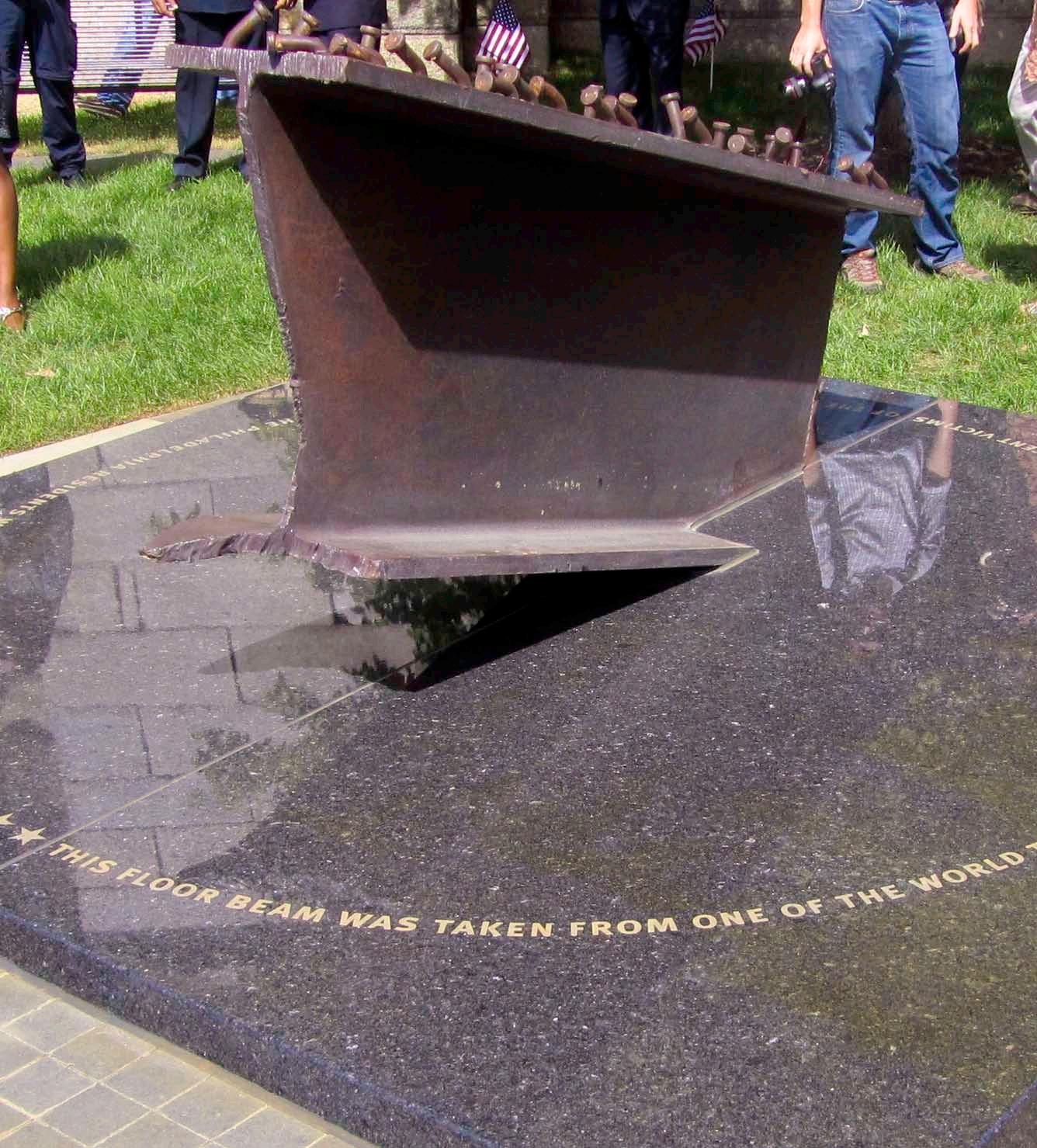
SHOEMAKER CONSTRUCTION CO. AWARDED RENOVATION AT AMTRAK’S 30TH STREET STATION
Shoemaker Construction Co. was selected in the fall to renovate the West Plaza and parking deck at Amtrak’s 30th Street Station. The work includes demolition, waterproofing, structural repairs replacement and painting of the exposed steel structure.
Amtrak and Shoemaker have teamed up on other construction projects in recent years. Most notably, Shoemaker managed the construction of Amtrak’s historic Wilmington Station as well as previous renovations and improvements to the 30th Street Station parking deck.
LAWYER OF THE YEAR 2013
Jacoby Donner announced that Henry J. Donner has been selected by his peers as Lawyer of the Year 2013, for The Best Lawyers in America® 2013 (Copyright 2012 by Woodward/White, Inc., of Aiken, SC), in the field of Construction Law. Donner is one of only three lawyers selected statewide, and the only lawyer in the Philadelphia area.
In addition, B. Christopher Lee and William A. Denmark were also selected by their peers for inclusion in The Best Lawyers in America® 2013. Lee was dually selected in the fields of Construction Law and Construction Litigation. Denmark was selected in the field of Construction Law.
Litigation chair, B. Christopher Lee, has been selected by his peers for inclusion in Best Lawyers® since 2006.
Shareholder, William A. Denmark, marks his first selection by his peers for inclusion in The Best Lawyers in America® 2013.
Philadelphia’s September 11 Memorial
2116 CHESTNUT STREET PROJECT UNDERWAY
On November 12 a large crowd gathered to celebrate the topping off of the 2116 Chestnut Street Apartments.
Construction of the 400,000 SF Class A residential building began in spring 2012. Once complete, the 34-story, 319 unit building will offer 130 enclosed parking spaces, 9,150 SF of retail space on Chestnut Street, a state-of-the-art amenity package for residential tenants and exceptional views of the city.
Mayor Michael A. Nutter said this project is an “investment of more than $104 million in Philadelphia and is expected to create approximately 900 construction jobs from beginning to completion.” He continued, “2116 Chestnut Street will be a tremendous addition of residential and commercial space to a great neighborhood.”
General Building Contractor Association member Madison Concrete has been instrumental in the construction of this exciting new project.

O’DONNELL & NACCARATO WIN NCSEA’S OUTSTANDING
PROJECT
AWARD FOR THE PROTON THERAPY CENTER AT ROBERT WOOD
JOHNSON UNIVERSITY HOSPITAL
O’Donnell & Naccarato is the recipient of the National Council of Structural Engineers Associations’ Outstanding Project Award for New Buildings under $10 Million. The award recognizes O’Donnell & Naccarato’s structural engineering design role in the new Proton Therapy Center at Robert Wood Johnson University Hospital in New Brunswick, New Jersey. Challenged by the confined site, deep excavation, radiation shielding requirements and the tight tolerances of the medical equipment, the project team incorporated several unconventional solutions into the center’s design. Through constant coordination with the design assist construction team, O’Donnell & Naccarato was able to deliver an efficient structural design of high complexity in a small 4,900 SF footprint 40 feet below the ground.
The center was designed to house two proton therapy treatment machines, which emit positively charged atomic particles that can be focused precisely on small cancerous tumors and lesions without harming the surrounding, healthy tissue. Due to adjacent buildings, neighboring properties and a busy thoroughfare, the construction required an unusually deep excavation of 40 feet. Various technical innovations were incorporated in the concrete and steel design to counter massive hydrostatic forces and meet strict requirements for the implementation of precision medical equipment. The treatment floor utilizes a notched cantilevered concrete slab which allows the medical equipment to rotate 180 degrees from directly below to directly above the patient. To avoid interfering with the motion of the rotating cyclotron and counterweight assembly, the team designed a hung catwalk system that allows for equipment maintenance within the treatment room vault.
GAETANO PICCIRILLI ELECTED 2013 CHAIR OF THE
STATE REAL ESTATE COMMISSION
Gaetano P. Piccirilli, an Associate in the Real Estate Group at Dilworth Paxson LLP, was elected 2013 Chair of the Pennsylvania State Real Estate Commission. Appointed by the governor and confirmed by the State Senate, the commission is one of 29 boards in Pennsylvania and responsible for licensing, regulating and disciplining real estate professionals, including brokers, in the Commonwealth of Pennsylvania.
YOU HEARD IT HERE FIRST! ORGANIC LIGHT EMITTING DIODES
By Gersil N. Kay
Green, sustainable, CO2-free and energy-efficient are today’s buzz words. They are properties sought for the building envelope; heating/ ventilating/air conditioning, power, lighting, and construction items covered in the national ASHRAE/IESNA/ ANSI Standard 90.1 - which is the basis for LEED, IECC, Green Globes, etc., plus local and state standards.
Of all construction disciplines, lighting is the easiest aspect to conserve energy, enhance design, and increase productivity. For the past decade Germany, Japan, South Korea and enlightened companies worldwide (like Philips, Osram, Acuity, NovaLed, etc.) have been developing a new form of illumination: organic light emitting diodes (OLEDs).
Sony and Panasonic, once bitter rivals, have allied to produce large-screen (55-inch) OLED TVs. Thinner screens than liquid crystal (LCD) and plasma displays with improved image quality could create a new TV demand, using a new production method of printing. They join Samsung and LG Electronics in this field.
OLEDs offer the potential of spaces illuminated without holes, boxes or hardware. Prototypes have already illuminated architectural surfaces and furniture without hardware or fixtures. They may also be transparent, emitting light from both flexible surfaces. Thus, transparent or translucent glass can be lit. This newer type of light-emitting semiconductor could drastically revolutionize architectural, lighting and interior design. The United States is late in commercially recognizing this newest technology and needs to catch up.
Different from currently-promoted non-organic LEDs, OLEDs are not composed of the many LED components to automobile manufactures gather from different quality sources. Drivers, heat sinks, optics and other items in LEDs each have different life times and dependability.
Instead, OLED is simply printed like newsprint, using high-speed processes similar to offset printing. This could lower production costs using relatively inexpensive equipment. Using this printing process to make OLEDs, along with the required circuiting of drivers (ballasts), power management and control electronics, reduces manufacturing process steps and time.
This manufacturing method renders OLEDs less expensive to make, and removes the uncertainty of parts or soldering unexpectedly failing. OLEDs are a sandwich made from sheets of the conductive organic (carbon-based) materials orpolymer, constructed in laminations of conductive and non-conductive layers (anode and cathode) treated to conduct electricity. When energized, different layers become positively or negatively charged relative to each other, which stimulates emission of a bright light called photoluminescence. The process is called epitaxy.

There are two types: Passive Matrix OLEDS (PMOLED) are used in small displays like cell phones. Active Matrix (AMOLED) using thin film transistors (TFT) have been developed for high-resolution images, including projects using flexible transparent and single-sided materials. Some TV screens already employ OLED technology. Architectural applications are the next step.
The simplicity, potential cost savings and better color rendition of OLEDs versus inorganic LEDs, which are complex structures slowly grown in reactors on hard substrate wafers that are cut up and placed into light source devices and require complex fixture structure and thermal control.
In short, OLEDs offer the potential of spaces illuminated without holes, boxes or hardware or fixtures. Prototypes have already illuminated architectural surfaces or furniture directly without hardware or fixtures, emitting light from both flexible surfaces.
Amazingly thin (less than 2 mm thick) and flat, and with little heat dissipation, OLEDs can be embedded into most materials with ease. That gives designers almost limitless scope to mold and meld OLED into everyday objects, scenes and surfaces, from chairs and clothing to walls, windows and tabletops. As a result, not only can ambient lighting become an integral part of an object or building, but also designers can use light itself to shape products and architecture.
One already available proprietary OLED Module is a modular, ready-touse product incorporating all the necessary electrical controls – enabling one to easily and effectively integrate OLED technology into design proj-
Pictured is a 20-foot diameter globe of the world in a Japanese Museum.

ects. It bridges the gap between cutting-edge technology and creative design. No longer restricted by technical limitations, OLEDs can open minds to the possibilities of light, and lead us to discover how they can work in various projects and designs. This innovation opens up arrange of exciting possibilities, now and in years to come.
Currently, OLEDs provide only ambient (general) light, but that will change. Where suitable, a mixture of directional glass fibre optics (GFO) and ambient OLEDs could be the most sustainable, practical solution to many designs.
OLED beneficial properties include:
• fast response times
• wide viewing angles
• exceptional color reproduction
• outstanding contrast
• high brightness (more sparkle than LEDs)
• no glare
• low power consumption - 1/6 of incandescent
• economic production
• extremely thin and lightweight: flexible enough to be used in flat or curved surfaces, fabric, furniture, glass (translucent or transparent), even as wallpaper
There are further details fascinating only to lighting geeks, so they will
not be given here. Instead the emphasis will be on OLED usefulness to the construction industry, because projects won’t happen unless there is a possibility of either making money or saving it. Listed below are a sampling of available financial incentives (rebates, grants, reductions, etc.) for energyconserving activities:
Note that only about 1 percent of those eligible for this economic benefit apply to the IRS; lack of knowledge about the offerings and affordable conservation methods is one reason. Terminal inertia to change entrenched procedures is another. Also, reluctance to spend a little money to make a lot more, is the “penny-wise-pound-foolish” approach taken by many.
SOME AVAILABLE ECONOMIC SOURCES
The Federal EPAct 179D_ftn2#_ftn2, 2006-2013, where credits can be taken for 15 years:
COST
Survey by a qualified engineer using DOE softwear for a five-year survey of Cost Saving System (CSS) -= $0.15 to$$1.20 per square foot, depending upon complexity
ALLOWANCE
$0.60 per square foot for Building Envelope
$0.60 per square foot for HVAC
$0.60 per square foot for Lighting/Power
Total - $1.80 per square foot
CALCULATED BY
Whole Building method
Partial Building method
BUILDINGS COVERED
Both New Built and Existing Renovated Commercial – owner/tenants get credits
Residential
Government/non-profit – principal designer may collect credits. For example, alert accountants and FP&L save Disney $500,000 per year in Florida.
UTILITIES
• Local/State: Pennsylvania just instituted aid for historic building upgrading; New Jersey already offers it.
• The federal 20% Investment Tax Credit for Rehabilitation of Incomeproducing historic property
• Individual company inducements
Interior ceilings in elevators are a perfect application for OLEDs. They eliminate having to relamp other types of lighting. Restaurants have many uses for OLEDs for both ambient and directional beams. Hospitals are looking for the best lighting for Lupus and epilepsy patients. Flickering from fluorescents is distressing.
For commercial/retail/high-end residential, institutional, museum purposes, combined with glass fibre optics (GFO) for directional (task, display, architectural features) lighting, OLEDs provide glare proof ambient illumination that is the most energy-efficient, flexible and sustainable.
Both individual and flush ceiling-mounted fixtures are offered. Automated special effects of color, motion and dimming often are controlled by a single push button.
Montgomer yville, PA 18936 Email: harry@paradigmgrafix.com p: 215-641-484 4 f: 215-643-2402
REGION ON THE RISE
Tuesday, March 13, 2012
8:00 AM – 9:00 AM
9:00 AM – 10:30 AM
Loews Philadelphia Hotel Philadelphia, PA 19107
STATUS OF THE INDUSTRY
ASSOCIATIONS & UNIONS
DVMI - Delaware Valley Masonry Institute, Inc.
SEE OUR AD ON PAGE 39.
GBCA, General Building Contractors Association, 36 S. 18th Street, Philadelphia, PA 19103. P215-568-7015. Web Site: www.gbca.com.
SEE OUR AD ON PAGE 24-25.
LDC, Laborer’s District Council, 500 Lancaster Pike, Exton, PA 19341. P 610-524-0404.
SEE OUR AD ON PAGE 46.
LECET, The Laborer’s - Employer’s Cooperation and Education Trust and The Laborer’s District Council of Metropolitan Philadelphia & Vicinity. P215922-6139, Web Site: www.LDC-PHILAVIC.org.
SEE OUR AD ON PAGE 47.
Steel Erectors Association of Metropolitan Philadelphia and Vicinity.
SEE OUR AD ON PAGE 38.
Union Iron Workers of Local 401, “Building America Since 1896” 11600 Norcom Road, Philadelphia, PA 19154. P215676-3000.
SEE OUR AD ON PAGE 9.
ATTORNEYS
Jacoby Donner, P.C., Attorneys at Law, 1700 Market Street, Suite 3100, Philadelphia, PA 19103. P215-5632400, Web Site: www.jacobydonner. com.
SEE OUR AD ON PAGE 23.
BUILDING MATERIALS
George F. Kempf Supply Co., Philadelphia, PA. West Chester, PA. Trenton, NJ. Wilmington, DE. P1-800-326-5367, Web Site: www.kempfsupply.com.
SEE OUR AD ON BACK COVER.
CONCRETE PRODUCTS
Fizzano Bros., P610-833-1100, Web Site: www.fizzano.com.
SEE OUR AD ON PAGE 35.
CONSTRUCTION LITIGATION
Cohen Seglias Pallas Greenhall & Furman PC, 30 South 17th Street, 19th Fl., Philadelphia, PA, 19103. P215-5641700, Web Site: www.cohenseglias.com.
SEE OUR AD ON PAGE 20.
CONSTRUCTION PRODUCTS
USG Sheetrock, Web Site: www.theweighthasbeenlifted.com.
SEE OUR AD ON PAGE 12-13.
CONSULTANTS
EisnerAmper, LLP, Construction Real Estate Services Division, 101 West Avenue, Jenkintown, PA 19046. P215881-8800, 856-354-6054, Web Site: www.grgrp.com.
SEE OUR AD ON PAGE 37.
DEMOLITION
Geppert Bros Inc., Demolition Contractors, Main Office 3101 Trewigtown Rd., Colmar, PA 18915. P215-822-7900, F215-822-0635.
SEE OUR AD ON PAGE 11.
EDUCATION & TRAINING
Laborer’s District Council, Education and Training / Apprenticeship School, 500 Lancaster Pike, Exton, PA 19341. P610-524-0404, Email: jharper.e&t@ ldc-phila-vic.org.
SEE OUR AD ON PAGE 46.
GENERAL CONTRACTORS & CONSTRUCTION MANAGERS
Haverstick-Borthwick Company, Builders and Construction Managers, 400 Stenton Avenue, PO Box 766, Plymouth Meeting, PA 19462. P215-248-3000, 610-825-9300, Web Site: www.haverstick.com.
SEE OUR AD ON PAGE 36.
INSURANCE & BONDING
Conner Strong & Buckelew, James M. Hanrahan or Steven Raffuel. P1-877861-3220, Web Site: www.connerstrong.com.
SEE OUR AD ON PAGE 6. Engle-Hambright & Davies, P1-800544-7292, Web Site: www.ehd-ins.com.
SEE OUR AD ON PAGE 5.
Graham Company, Insurance Brokers and Consultants. P215-567-6300, Web Site: www.grahamco.com
SEE OUR AD ON PAGE 3.
PRINTING & DOCUMENT MANAGEMENT TECHNOLOGIES
Paradigm Grafix, 123 Keystone Drive, Montgomeryville, PA 18936. P215-6414844 x212, F215-643-2402.
SEE OUR AD IN CLASSIFIEDS.
SPECIALTY CONTRACTORS
B. Pietrini & Sons, 111 East Church Road, King of Prussia, PA 19406. P610265-2110, F610-265-6068, Web Site: www.bpietrini.com.
SEE OUR AD ON PAGE 2.